
Ellenton · Manatee County
Tankless Water Heater Installation in Ellenton, FL
Tankless heaters warm water only when a tap opens, which frees floor space and ends the wait for a tank to recover. Whether one makes sense for your Ellenton home depends on your fuel, your electrical panel and how many showers run at once. We look at all three before recommending a unit.
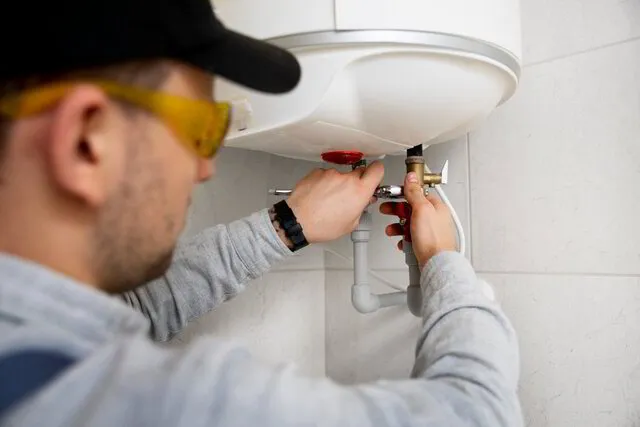
Gas or electric: the first fork in the road
Many houses in Ellenton are all-electric, particularly in the manufactured-home communities and in older block homes that were never plumbed for gas. Others, including some newer subdivisions, have natural gas or a propane tank. That difference decides more than anything else.
A gas tankless unit needs a gas line large enough to feed it and a proper vent to the outside, often through a wall or the roof. An electric tankless unit needs no vent, but it draws a great deal of current while running and frequently requires dedicated circuits and sometimes an upgraded electrical service. Before quoting, we check the panel, the gas line size and where venting could go, because those items can change the project more than the heater itself.
Sizing for Gulf Coast water
A tankless heater is sized by flow and temperature rise. Here the incoming water is warmer for much of the year than in northern states, so a unit has less work to do, and a heater that struggles in a cold climate can serve more fixtures in Manatee County. Winter mornings still bring cooler water, so we size for those, not for August.
We count how many fixtures you realistically run at the same time. A retired couple in a two-bath home has very different needs from a family with teenagers showering back to back while the dishwasher runs.
Scale is the main enemy
The water in this part of the county carries dissolved minerals, and inside a tankless heater that scale settles on the heat exchanger. Left alone, it reduces output, triggers error codes and shortens the life of the unit. We install isolation valves so the heater can be descaled by circulating a mild solution through it, and we talk with you about whether a scale-reduction filter or a softener ahead of the heater is worth adding.
Plan on flushing a tankless heater about once a year. Homes on harder water or with heavy use may need it more often.
Honest trade-offs
- Endless hot water as long as demand stays within the unit's flow rating
- Wall mounting frees the floor space a tank occupied in a garage or closet
- Higher installed cost than a tank, especially when gas lines or electrical work are needed
- A brief cold-water pause can occur when a tap is turned off and quickly back on
- A recirculation option can shorten the wait for hot water at distant bathrooms
- Annual descaling is not optional if you want the unit to last
Seasonal homes and freeze protection
If you spend part of the year away, a tankless heater is well suited: nothing sits heating a full tank in an empty house. Units mounted outside on an exterior wall have built-in freeze protection that relies on power, so leave the breaker on even when you shut the water off, unless you drain the unit completely.
TK Plumbing, license CFC1426077, installs and services tankless heaters across Ellenton and the rest of Manatee County. Call 941-392-3846 to have your home evaluated and receive a written quote.
Ellenton questions
Can I put a tankless water heater in my manufactured home?
Sometimes, but it needs a careful look. Electric tankless units often require more electrical capacity than these homes have, and gas units need suitable venting. We check before recommending it, and a compact tank is sometimes the better fit.
Will tankless lower my power bill?
It can reduce the energy lost keeping a tank hot around the clock, and the savings are larger for homes that sit empty part of the year. How much depends on your usage, fuel and the unit you choose.
Do I need a water softener with a tankless heater?
Not necessarily, but scale control helps. Many Ellenton owners simply descale annually. Where water is harder or use is heavy, a scale-reduction filter or softener reduces how often that maintenance is needed.
Can my current gas line handle a tankless unit?
Often it cannot. Tankless gas heaters use much more gas while running than a tank heater does, so the line size and meter capacity have to be checked before installation.