
Lakewood Ranch · Sarasota County
Tankless Water Heater Installation in Lakewood Ranch
Lakewood Ranch homes often have several bathrooms, oversized showers and soaking tubs, and a tank that runs cold after two showers gets old quickly. A tankless water heater heats water as it flows, freeing up garage space and ending the wait for a tank to recover. It is not the right choice for every house, though, so here is what we look at first.
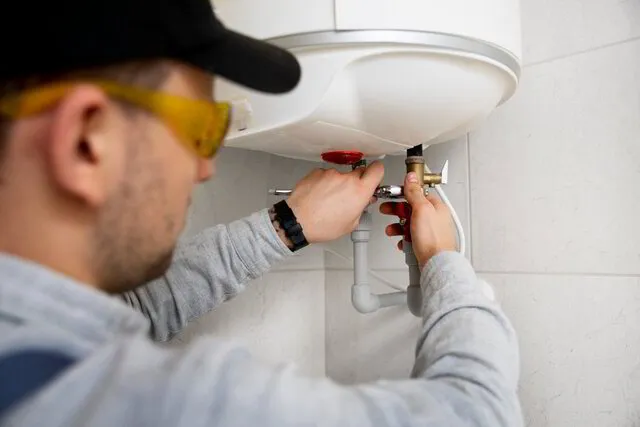
Is your house a good fit?
The biggest factor is fuel. Homes with natural gas or propane service are usually strong candidates, because a gas tankless unit can supply several fixtures at once. Many neighborhoods in the community have gas available, but not every street or house does, and some homes were built all-electric.
Electric tankless units exist, but a whole-house model needs a large amount of electrical capacity. In an all-electric home, adding one can mean a panel upgrade or new service, which changes the math considerably. In those cases, a heat pump water heater or a larger high-efficiency tank is often the more practical answer, and we will say so.
Sizing for how you actually use water
Tankless heaters are rated by flow, measured in gallons per minute, at a given temperature rise. Florida has a small advantage here: incoming water is warmer than in northern states, so a unit can deliver more flow at a comfortable temperature for most of the year.
We size by counting the fixtures you are likely to run at the same time. A couple who rarely overlap showers needs far less than a household with teenagers, a rainfall showerhead and a garden tub. A house that fills up with visiting family during winter needs to be sized for those peak weeks, not the quiet ones.
We also look at the length of the pipe runs. Single-story houses in the community can be long and spread out, so a primary suite at the far end of the home may wait a while for hot water no matter what heater is installed. That is when a recirculation setup or a second point-of-use unit is worth discussing.
Venting, location and the association
Gas tankless heaters need proper venting, either through a wall or the roof, and they need clearance from windows, doors and air intakes. Some models are designed to mount outdoors on an exterior wall, which saves interior space but puts equipment where neighbors can see it.
Because of that, it is wise to check your HOA guidelines before choosing an outdoor model or a new wall vent on a front-facing side. Many associations have rules about visible equipment and may ask for a review. Mounting the unit in the garage with a side or rear vent often avoids the question. We can provide model information and a simple layout for your application if one is needed.
What installation involves
Gas line sizing is the item homeowners overlook most. A tankless burner draws much more gas at full fire than an old tank, and an undersized line causes cold-water sandwiches and error codes.
- Removing and hauling away the old tank
- Mounting the unit and running new water connections with isolation valves
- Upsizing the gas line where the existing pipe is too small for the burner
- Installing venting to the manufacturer's specifications
- Adding a dedicated electrical circuit or outlet for controls
- Testing flow, temperature and combustion before we leave
Upkeep with local water
Minerals in the water that both counties supply can coat the heat exchanger inside a tankless unit. Flushing it with a descaling solution through the service valves, usually once a year, keeps it running efficiently and prevents scale-related shutdowns. A softener or scale-reduction filter ahead of the unit helps as well.
Clean the inlet screen periodically and keep the area around the unit clear. If you leave for the summer, the unit uses almost no energy while idle, which is one reason seasonal residents like them.
Lakewood Ranch questions
Will a tankless heater give me hot water faster at the tap?
Not necessarily. It removes the limit on how much hot water you have, but water still has to travel from the heater to the fixture. Recirculation options can shorten that wait in larger houses.
Can I put a tankless unit in my garage where the old tank was?
Usually, yes. The wall near the old tank is often a good spot because water lines are already close. Venting and gas line size determine the final location.
Does a tankless heater work during a power outage?
Gas tankless units need electricity for their controls and fan, so they stop during an outage unless they are on a backup power source. Plan for that during storm season.