
Longboat Key · Sarasota County
Tankless Water Heater Installation for Longboat Key Homes and Condos
Tankless heaters free up closet space and stop wasting energy keeping a tank hot in a home that sits empty half the year. Whether one suits your Longboat Key property depends on the power or gas available, where a vent can go, and what your association allows. We check all of it before quoting.
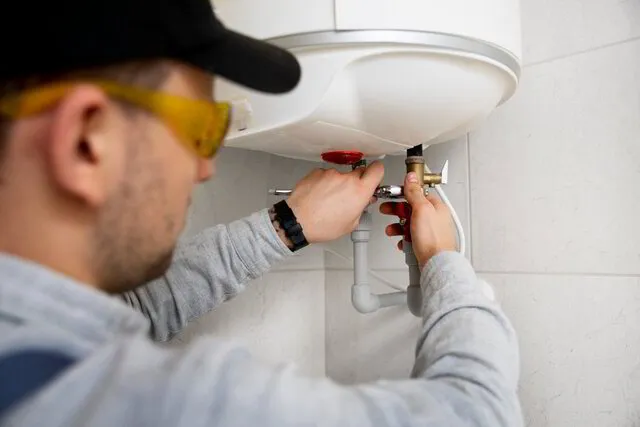
Why island owners ask about going tankless
A conventional tank keeps its full volume of water hot around the clock, whether anyone is home or not. For part-time residents who spend winters on the key and the rest of the year elsewhere, that is a lot of heating for an empty house. A tankless unit only fires when a tap opens. It also gives up much less floor space, which matters in condo closets where the tank shares room with an air handler.
There is also the leak question. A storage tank eventually fails, and when it fails in a mid-rise building it can damage the units below. A tankless heater holds very little water, so the risk of a sudden large release is much smaller.
Questions we answer before quoting
- Is the unit electric only, or is natural gas or propane available at the property?
- For electric models, does the panel have room for the large breakers they need?
- For gas models, can the gas line deliver enough volume, and where can the vent exit?
- How many showers and fixtures might run at the same time?
- Does the condo association limit wall penetrations, exterior venting or equipment changes?
- Will the new unit fit where the old tank was, or does piping need to move?
Electric versus gas on the key
Most condominiums on Longboat Key are all-electric, which points those owners toward electric tankless models or hybrid tanks. Whole-house electric tankless units draw heavy current, so the honest answer for some units is that the existing electrical service cannot support one without an upgrade the building may not allow. In that case we say so and talk through alternatives, such as a smaller point-of-use unit or a replacement tank with a leak pan and shutoff.
Some single-family homes have gas, either piped or from a propane tank. A gas tankless heater needs a properly sized supply line and a vent that terminates in an approved location. Exterior vent caps and wall-mounted outdoor units near the Gulf face constant salt exposure, so we choose locations that limit spray and recommend checking the exterior parts during routine service.
Sizing for how you actually use the house
A tankless heater is rated by how much water it can heat at once, not by how much it stores. A couple using one shower at a time needs far less capacity than a family gathering at a Gulf-front home over the holidays, with guests showering in three bathrooms after the beach. Florida's warmer incoming water helps, but an undersized unit still leaves someone with a lukewarm rinse. We size the unit from your fixtures and your busiest days, not from a default model number.
Upkeep after installation
Minerals in the water slowly coat the heat exchanger, and descaling is the main maintenance task. We install isolation valves so the unit can be flushed without draining the house, and we can schedule a flush for times you are on the island. If your home has a water softener or a whole-home filter, the descaling interval can stretch out. Before a long absence, we can show you how to shut the unit down cleanly.
Tankless questions from Longboat Key owners
Will my condo association let me install a tankless water heater?
Many do, with conditions. Associations commonly want to review electrical changes and anything that penetrates an exterior wall. We can provide the equipment details and installation plan your manager or board asks for.
Is a tankless heater worth it in a house I only use a few months a year?
It often fits that pattern well because nothing is heated while you are gone. Whether it pays off depends on the cost of any electrical or gas work, which we spell out in the written quote.
Do you service tankless heaters that someone else installed?
Yes. We descale, repair and troubleshoot existing tankless units, and replace them when the heat exchanger or controls have failed.
What happens to a tankless heater during a power outage after a storm?
Electric units stop heating until power returns, and gas units also need electricity for their controls and fans. Once power is restored, the unit should restart on its own. If it shows an error code or the area around it flooded, have it checked before using it.