
Bradenton · Manatee County
Water Heater Repair in Bradenton, FL
A Bradenton water heater lives a harder life than the label suggests. Mineral-heavy water settles in the tank, garage heat works on the seals, and many units sit idle for months while owners are away. We diagnose what failed, fix it when a fix makes sense, and tell you plainly when it does not.
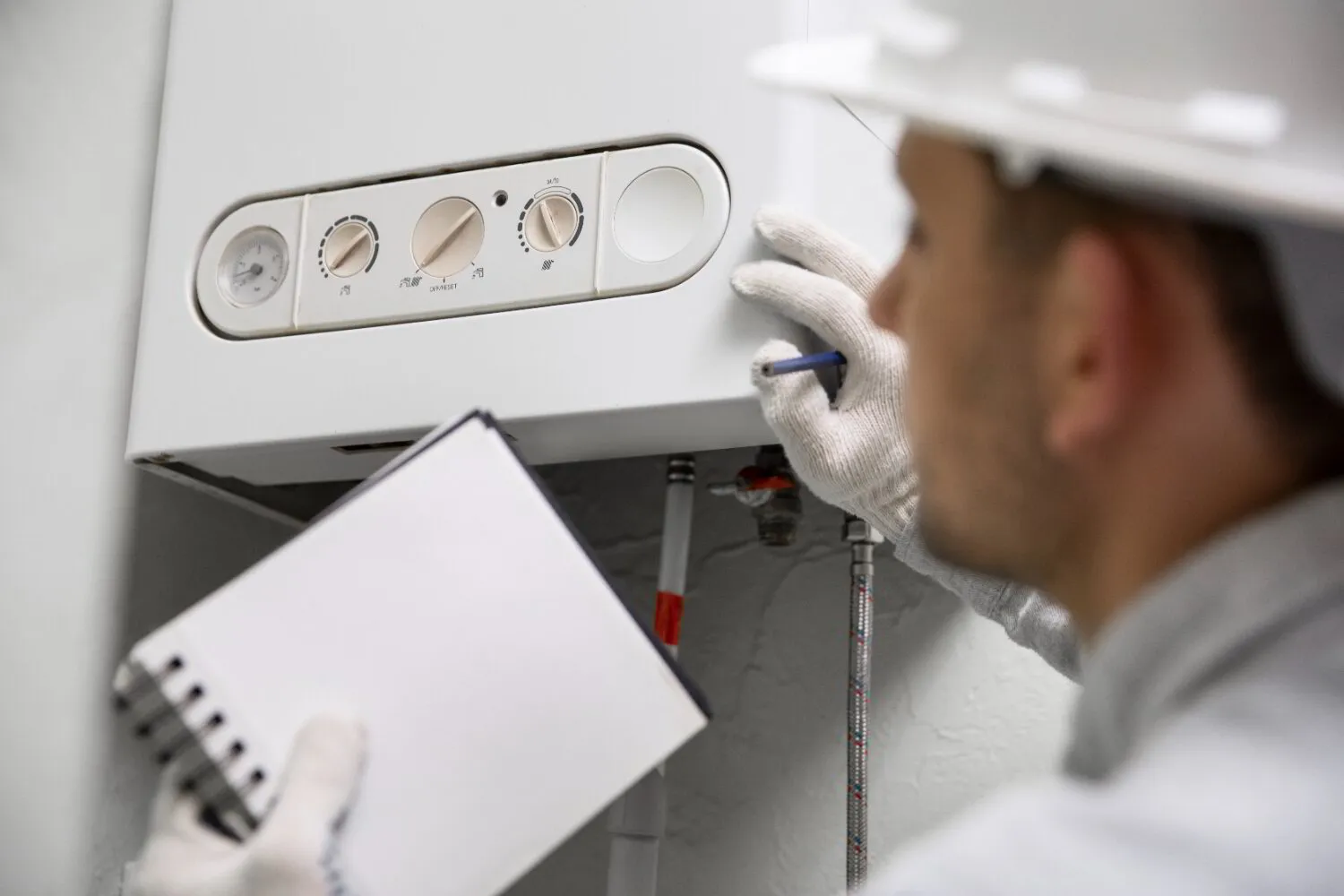
Symptoms and what they usually mean
- Hot water runs out quickly: often a failed lower element on an electric unit, or sediment that has filled the bottom of the tank.
- Popping or rumbling while heating: a layer of scale on the tank floor is trapping water and boiling it.
- Rust-colored hot water only: the anode rod may be used up, letting the tank itself corrode.
- Rotten-egg smell from the hot side: a reaction between the anode and the water, usually fixable with a different rod.
- Water around the base: could be a loose fitting or a relief valve doing its job, or a tank that has rusted through.
- No hot water at all: tripped breaker, a burned element, a failed thermostat, or on gas units a pilot or thermocouple issue.
Where Bradenton heaters live, and why it matters
In most single-family homes here, the heater sits in the garage or a utility room off the kitchen. Garage installations in Florida run hot much of the year, which is easy on the burner but tough on plastic parts, wiring and drain pans. We check that the pan drains somewhere useful and that the relief valve line runs to an approved spot.
Condos are a different story. Many units in buildings around West Bradenton and along the river have the heater inside a closet, sometimes above finished flooring with neighbors below. A slow leak in that closet is a bigger deal than one in a garage, so we pay close attention to pans, shutoffs and the condition of the connectors in stacked buildings.
Older homes near downtown sometimes have heaters squeezed into spaces that were never designed for today's taller, better-insulated tanks. Replacing one of those can mean adjusting the piping or relocating the unit, and we tell you that before you commit.
Repair or replace: how we help you decide
Elements, thermostats, anode rods, relief valves, gas controls and supply connectors can all be replaced. If the tank is sound, that is often the sensible choice. If the tank itself is leaking, there is no repair; the steel has failed and the heater needs to come out.
Age matters too. A tank that is well into its second decade, with heavy sediment and a corroded jacket, may not be worth new parts even if one part would get it running. We give you both numbers in writing, the repair and the replacement, and let you choose.
Hard water and sediment
Florida water picks up calcium and magnesium on its way through the limestone, and much of the Bradenton area deals with that hardness. Every time the tank heats, some of those minerals drop out. Over years they form a crust that insulates the water from the burner or buries the lower element.
Flushing the tank once a year slows the buildup. If a heater has never been flushed and is already loud, a flush can loosen chunks that clog the drain valve, so we approach older tanks carefully. If you are tired of the scale, ask about a softener or filtration system; it protects the heater and every fixture downstream.
Before the technician arrives
If the tank is leaking, shut the cold-water valve above it and turn off power at the breaker, or set a gas unit to its vacation or pilot setting. Clear a path to the heater and move stored boxes away from the pan. If you rent the home seasonally, tell us whether guests are booked so we can plan around them.
Bradenton questions
My Bradenton condo heater is in a hall closet. Can it be replaced with the same size?
Usually, but newer tanks can be slightly larger because of insulation requirements. We measure the closet and the door opening before quoting so the new unit actually fits.
Is it worth repairing a heater I only use part of the year?
Often yes, since seasonal use means fewer heating cycles. The bigger concern is what happens while you are gone, so we can talk about shutoffs and a leak sensor in the pan.
Can you switch me from a tank to a tankless unit instead?
We can. A tankless heater needs the right gas line or electrical service, so we look at what your home has before recommending it. We cover that on our tankless page.
Why does my hot water smell like sulfur but the cold does not?
That is usually the anode rod reacting with the water inside the tank. Swapping to a different type of anode often solves it without replacing the heater.