
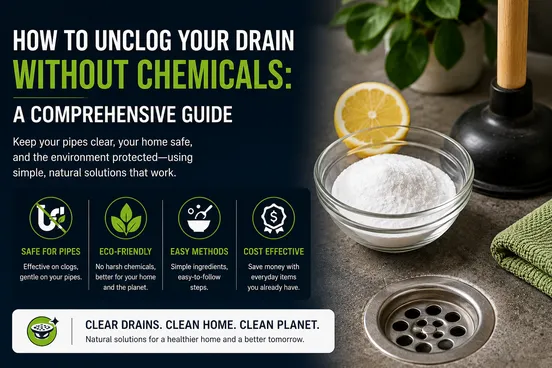
How to Unclog Your Drain Without Chemicals: A Comprehensive Guide
Introduction
Clogged drains are among the most frustrating household problems that homeowners, property managers, and business owners face daily. Whether it's a kitchen sink backing up during dinner preparation, a bathroom drain running slowly after morning routines, or a commercial facility experiencing drainage issues that disrupt operations, these plumbing challenges can quickly escalate from minor inconveniences to major headaches.
While many people instinctively reach for harsh chemical drain cleaners when faced with stubborn clogs, these products often cause more harm than good. Chemical cleaners can corrode pipes, harm the environment, pose health risks to your family or employees, and may only provide temporary relief rather than addressing the root cause of the problem.
Learning how to unclog your drain without chemicals offers a safer, more sustainable approach to drain cleaning and maintenance. Eco-friendly plumbing solutions not only protect your pipes and the environment but also save money in the long run by preventing costly repairs. Natural drain cleaners and mechanical methods are often more effective than chemical alternatives, providing lasting results without the associated risks. This comprehensive guide will equip you with proven techniques, professional insights, and preventative strategies to keep your drains flowing smoothly using safe, chemical-free methods that protect both your plumbing system and your health.
Identifying the Cause of the Clog
Understanding what's causing your drain blockage is crucial for selecting the most effective unclogging method. Different types of clogs require different approaches, and knowing how to clear a clogged sink starts with proper diagnosis of the underlying issue.
Common causes of drain clogs include:
- Hair accumulation: Particularly common in bathroom sinks, showers, and tubs where hair combines with soap residue to form stubborn blockages
- Food particles: Kitchen sinks often become clogged with grease, food scraps, coffee grounds, and cooking oils that solidify in pipes
- Soap scum buildup: Traditional bar soaps can leave mineral deposits that accumulate over time, especially in hard water areas
- Foreign objects: Items like jewelry, toys, or sanitary products accidentally dropped down drains
- Mineral deposits: Hard water can cause calcium and lime buildup that gradually narrows pipe openings
- Tree root intrusion: Outdoor drains and sewer lines can become blocked by invasive tree roots seeking moisture
Recognizing the warning signs helps you address clogs before they become severe:
- Slow drainage: Water takes longer than usual to drain completely, indicating partial blockage
- Gurgling sounds: Air bubbles trapped by the clog create distinctive noises as water attempts to flow
- Unpleasant odors: Decomposing organic matter trapped in pipes produces foul smells
- Water backing up: Complete blockages cause water to rise in sinks, tubs, or floor drains
- Multiple drain issues: When several drains show symptoms simultaneously, the problem likely exists in the main sewer line
Location-specific indicators can help pinpoint the problem:
- Kitchen clogs often involve grease and emit food-related odors
- Bathroom clogs typically feature hair and soap residue with a musty smell
- Laundry room clogs may include lint, detergent buildup, and fabric fibers
- Floor drains might accumulate dirt, debris, and seasonal materials like leaves
Professional plumbers recommend addressing these warning signs promptly, as minor clogs are much easier to resolve than complete blockages that may require extensive intervention.
Tools and Materials You'll Need
Successfully learning how to unclog your drain without chemicals requires having the right tools and natural materials readily available. Professional plumbers rely on these same basic implements for many drain clearing operations, making them excellent investments for homeowners and property managers alike.
Essential mechanical tools:
Plunger: Choose a cup plunger for sinks and flat drains, or a flange plunger for toilets. Quality plungers feature sturdy handles and flexible rubber cups that create effective seals. Store your plunger in a clean, accessible location for immediate use when needed.
Pipe snake (drain auger): These flexible metal cables range from simple hand-crank models to more sophisticated versions with interchangeable heads. A 25-foot snake handles most residential applications, while commercial properties may benefit from longer versions. Choose models with comfortable handles and smooth-feeding mechanisms.
Wet/dry vacuum: A shop vacuum with strong suction capability can extract clogs that other methods cannot reach. Ensure your vacuum can handle wet materials and has appropriate attachments for drain access. This tool proves particularly valuable for removing solid objects or dense hair clogs.
Natural cleaning materials:
Baking soda: This versatile alkaline compound breaks down organic matter, neutralizes odors, and provides gentle abrasive action. Purchase food-grade baking soda in bulk for economical drain maintenance. Store in airtight containers to maintain effectiveness.
White vinegar: The acidic properties of vinegar dissolve mineral deposits, soap scum, and grease buildup. Use standard white vinegar rather than specialty varieties for consistent results. The combination of vinegar and baking soda creates a powerful natural drain cleaner through chemical reaction.
Hot water: Properly heated water (not boiling, which can damage pipes) helps dissolve grease, flush debris, and activate other cleaning agents. Use the hottest tap water available, or heat water to approximately 140-160°F for maximum effectiveness.
Additional helpful items:
- Rubber gloves for sanitary protection
- Flashlight or headlamp for visibility in dark spaces
- Bucket for catching water during repairs
- Old towels for cleanup and water absorption
- Wire coat hanger (straightened) for makeshift drain fishing
- Dish soap for lubrication and additional cleaning power
Having these eco-friendly plumbing solutions organized and accessible ensures you can address drain issues promptly before they escalate into major problems requiring professional intervention.
Simple Methods to Unclog Your Drain
Mastering these proven drain unclogging techniques provides effective alternatives to harsh chemical cleaners while protecting your plumbing system and the environment. Each method targets different types of blockages, so start with the gentlest approach and progress to more intensive techniques as needed.
The Plunger Method
Step-by-step plunging technique:
- Prepare the area: Remove standing water until about 2-3 inches remain in the sink or tub. This amount provides necessary suction while allowing the plunger to work effectively.
- Create proper seal: Position the plunger cup completely over the drain opening, ensuring no air gaps exist around the edges. For sinks with overflow openings, block them with wet rags to maximize pressure.
- Apply rhythmic pressure: Push down firmly but not aggressively, then pull up sharply to create suction. Maintain steady rhythm for 15-20 repetitions, focusing on the upward pull motion that dislodges clogs.
- Test drainage: Remove the plunger and observe water flow. If drainage improves but isn't complete, repeat the process 2-3 times.
The Pipe Snake Technique
Professional snake insertion method:
- Insert carefully: Feed the snake end into the drain opening, turning the handle clockwise while applying gentle pressure. Avoid forcing the cable, which can damage pipes or create kinks.
- Navigate bends: When you feel resistance, continue turning while gently pushing forward. Most residential drains have predictable curves that snakes can navigate with patience.
- Engage the clog: Once you feel the distinctive resistance of a blockage, work the snake back and forth while rotating to break up or hook the obstruction.
- Retrieve debris: Slowly withdraw the snake while continuing to rotate, bringing trapped material with you. Clean the cable thoroughly before storage.
The Baking Soda and Vinegar Method
Natural chemical reaction process:
- Initial preparation: Pour one cup of baking soda directly into the drain opening, using a funnel if necessary to ensure most powder enters the pipe rather than sitting on surfaces.
- Add vinegar: Follow with one cup of white vinegar, which immediately begins reacting with the baking soda to create fizzing action that breaks down organic matter.
- Seal and wait: Cover the drain with a stopper or wet cloth to contain the reaction within the pipes. Allow 30-60 minutes for the mixture to work on the clog.
- Flush thoroughly: Remove the cover and flush with hot water for several minutes to wash away loosened debris and remaining cleaning agents.
Hot Water Flushing
Proper hot water technique:
Heat water to 140-160°F (not boiling, which can damage PVC pipes). Pour slowly in a steady stream to maintain temperature and pressure. This method works particularly well for grease-based clogs and as a follow-up to other techniques.
Wet/Dry Vacuum Extraction
Vacuum suction method:
Set the vacuum to wet mode and create the tightest possible seal over the drain opening. The powerful suction can extract hair clogs, small objects, and loose debris that other methods cannot remove. This technique proves especially effective for bathroom drains with hair blockages.
These natural drain cleaners and mechanical methods provide comprehensive solutions for most common clogs while avoiding the environmental and health risks associated with chemical drain cleaners.
Preventative Maintenance Tips
Implementing consistent prevention of drain clogs saves time, money, and frustration while extending your plumbing system's lifespan. These plumbing maintenance tips, developed from professional experience, help property owners maintain smooth-flowing drains year-round.
Regular cleaning schedule:
Establish weekly maintenance routines tailored to each drain's usage patterns. Kitchen sinks benefit from daily hot water flushes after dishwashing, while bathroom drains need weekly hair removal and monthly deep cleaning. Commercial properties with heavy usage require more frequent attention, particularly in food service establishments where grease accumulation occurs rapidly.
Monthly natural drain treatment:
Perform the baking soda and vinegar treatment monthly as preventative maintenance, even when drains appear to function normally. This eco-friendly approach dissolves minor buildup before it becomes problematic, maintaining optimal flow rates and preventing odor development.
Smart usage practices:
Kitchen drain protection:
- Install mesh strainers to catch food particles and debris
- Scrape plates thoroughly before washing to minimize food waste entering drains
- Avoid pouring cooking grease, coffee grounds, or oil down drains
- Run cold water while using garbage disposals to solidify grease for proper grinding
- Use hot water after disposal operation to flush remaining particles
Bathroom drain maintenance:
- Remove visible hair from drain covers weekly
- Use drain screens to catch hair before it enters pipes
- Avoid flushing cotton swabs, dental floss, or personal hygiene products
- Clean soap dispensers regularly to prevent soap scum buildup
- Install water filtration systems in hard water areas to reduce mineral deposits
Commercial facility considerations:
Restaurants and retail businesses face unique challenges requiring specialized prevention strategies. Grease traps need regular professional cleaning, floor drains require daily inspection for debris accumulation, and employee training ensures proper waste disposal practices. Property managers should establish clear protocols for tenants regarding acceptable drain usage.
Seasonal maintenance adjustments:
Adjust prevention strategies based on seasonal factors. Fall requires extra attention to outdoor drains that may collect leaves and debris. Winter heating can increase soap scum formation, while summer cooking activities often introduce more grease into kitchen drains. Spring cleaning provides excellent opportunities for comprehensive drain inspection and maintenance.
Warning sign monitoring:
Train family members, employees, or tenants to recognize early warning signs of developing problems. Slow drainage, unusual sounds, or emerging odors indicate the need for immediate attention before complete blockages occur. Prompt response to these indicators prevents emergency situations and costly repairs.
Professional inspection scheduling:
Annual professional drain inspections identify potential problems before they become emergencies. Experienced plumbers can detect tree root intrusion, pipe deterioration, or structural issues that homeowners cannot easily identify. These proactive measures prove especially valuable for older properties or buildings with extensive plumbing systems.
Consistent application of these preventative measures dramatically reduces the frequency and severity of drain clogs while supporting overall plumbing system health.
When to Call a Professional
Recognizing when DIY methods have reached their limits prevents property damage and ensures safety while addressing complex plumbing issues that require professional expertise. Understanding these boundaries helps property owners make informed decisions about when to seek professional plumbing services.
Clear indicators for professional intervention:
Recurring clogs: When the same drain repeatedly clogs despite successful clearing attempts, underlying issues likely exist within the pipe system. Tree root intrusion, pipe deterioration, or structural problems require professional diagnosis and specialized equipment for permanent resolution.
Multiple drain involvement: If several drains throughout your property experience simultaneous problems, the issue probably exists in main sewer lines rather than individual drain branches. Professional plumbers possess the equipment and expertise necessary to address main line blockages safely and effectively.
Sewage backup situations: Any instance of sewage backing up into sinks, tubs, or floor drains requires immediate professional attention. These situations pose serious health risks and may indicate major system failures that DIY methods cannot address.
Strange sounds or smells: Persistent gurgling sounds, bubbling noises, or foul odors that continue after attempted cleaning suggest deeper problems within the plumbing system. Professional inspection can identify leaks, ventilation issues, or structural damage requiring specialized repair.
Benefits of professional plumbing services:
Professional plumbers bring advanced diagnostic equipment, including video inspection cameras that reveal pipe interiors, hydro-jetting systems for thorough cleaning, and specialized tools for complex repairs. Their training enables them to identify problems that property owners might overlook while ensuring work meets local building codes and safety standards.
TK Plumbing's comprehensive solutions:
TK Plumbing offers complete drain cleaning and repair services for residential and commercial properties throughout the region. Our experienced technicians utilize state-of-the-art equipment for drain inspection, cleaning, and repair while providing transparent pricing and reliable service. From emergency plumbing support to preventative maintenance programs, we deliver professional solutions that protect your property investment.
Our services include hydro-jetting for thorough pipe cleaning, video inspection for accurate problem diagnosis, and trenchless repair methods that minimize property disruption. We work with homeowners, property managers, contractors, and commercial businesses to maintain optimal plumbing performance while preventing costly emergency situations.
Professional intervention ensures proper problem resolution while protecting your property value and maintaining safe, functional plumbing systems for years to come.
Conclusion
Learning how to unclog your drain without chemicals empowers property owners with safe, effective methods for maintaining healthy plumbing systems while protecting the environment and family health. The techniques outlined in this guide—from simple plunging and snaking to natural cleaning solutions using baking soda and vinegar—provide comprehensive alternatives to harsh chemical cleaners that often cause more harm than good.
These eco-friendly plumbing solutions offer numerous advantages over traditional chemical approaches. Natural drain cleaners protect pipe integrity, reduce environmental impact, and eliminate health risks associated with toxic fumes and chemical residues. The mechanical methods described here address root causes rather than providing temporary fixes, resulting in longer-lasting solutions and fewer recurring problems.
Successful drain maintenance combines these natural unclogging techniques with consistent preventative care. Regular cleaning schedules, smart usage practices, and prompt attention to warning signs prevent most clogs from developing into serious problems. Property managers, homeowners, and business owners who implement these strategies enjoy reliable plumbing performance while avoiding costly emergency repairs.
Remember that while these DIY methods handle most common drain issues effectively, complex problems require professional expertise. Recognizing when to seek professional help protects your property investment and ensures safety for occupants. The combination of informed DIY maintenance and professional support when needed creates the optimal approach to long-term plumbing system health.
By choosing natural, chemical-free methods for drain maintenance, you contribute to environmental protection while maintaining safe, functional plumbing systems. These proven techniques, developed from professional plumbing experience, provide reliable solutions that protect both your pipes and your health while delivering effective results that last.
Ready to tackle stubborn drain clogs or need professional plumbing assistance? Contact TK Plumbing today at (941) 392-3846 for expert drain cleaning services, emergency plumbing support, or comprehensive plumbing maintenance solutions. Our experienced team serves residential and commercial properties with reliable, professional service you can trust. Visit https://tkplumbing941.com/ to learn more about our complete plumbing services and schedule your consultation today!