
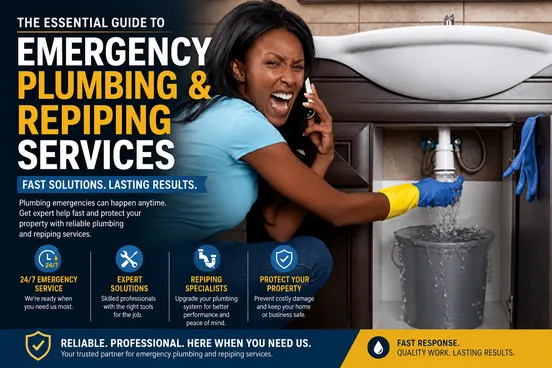
Essential Guide to Emergency Plumbing and Repiping Services
When a pipe bursts at 2 AM or your commercial building's main water line fails during business hours, you need more than just a regular plumber – you need immediate, professional intervention. Emergency plumbing situations don't follow convenient schedules, and the damage they can cause escalates rapidly with every passing minute.
Whether you're a homeowner dealing with a flooded basement, a property manager facing tenant complaints about no water pressure, or a restaurant owner whose kitchen operations have ground to a halt, understanding emergency plumbing and repiping services can mean the difference between a minor inconvenience and a catastrophic loss.
This comprehensive guide will walk you through everything you need to know about emergency plumbing interventions, from identifying urgent situations to understanding when complete repiping becomes necessary. We'll explore how professional emergency services operate, what to expect during the repair process, and most importantly, how to choose the right service provider when every minute counts. By the end of this guide, you'll be equipped with the knowledge to make informed decisions during plumbing crises and understand the long-term solutions that can prevent future emergencies from disrupting your life or business operations.
Introduction to Emergency Plumbing and Repiping
Emergency plumbing services represent the critical response system for urgent plumbing failures that require immediate professional intervention. Unlike routine plumbing maintenance or scheduled repairs, emergency services operate around the clock to address situations that pose immediate threats to property, health, or safety. These services encompass everything from burst pipe repairs and severe leak detection to complete system shutdowns and water damage mitigation.
The importance of timely repiping services during emergencies cannot be overstated. When aging pipes fail catastrophically, temporary patches often prove insufficient for long-term stability. Emergency repiping involves the rapid replacement of compromised pipe sections or entire plumbing systems when immediate action prevents further damage. This process requires specialized expertise, proper materials, and the ability to work efficiently under pressure while maintaining quality standards.
Common plumbing emergencies carry significant implications beyond immediate inconvenience. Burst pipes can flood properties within minutes, causing extensive water damage to floors, walls, and personal belongings. Sewer line backups create unsanitary conditions that pose health risks and require immediate remediation. Gas line leaks present serious safety hazards that demand instant professional response. Water heater failures can leave families without hot water while potentially causing property damage through flooding or gas exposure.
The financial implications of plumbing emergencies extend far beyond repair costs. Water damage restoration, mold remediation, temporary housing expenses, and business interruption losses can quickly escalate into tens of thousands of dollars. For commercial properties, plumbing emergencies can force operational shutdowns, resulting in lost revenue, employee productivity, and customer relationships. Understanding these broader implications helps property owners appreciate the value of immediate professional intervention and quality emergency plumbing and repiping services.
When to Call Emergency Plumbing Services
Identifying genuine plumbing emergencies requires understanding the difference between urgent situations requiring immediate attention and problems that can wait for regular business hours. Burst pipes represent the most obvious emergency, particularly when they occur in walls, basements, or areas where water can cause extensive property damage. These situations demand immediate professional response to minimize flooding and prevent structural damage.
Severe leaks that cannot be controlled with shutoff valves constitute emergencies requiring prompt intervention. This includes leaks from water heaters, main water lines, or situations where the leak source cannot be located or accessed. Gas leaks from water heaters or gas lines require immediate evacuation and professional emergency response due to explosion and poisoning risks. Sewer line backups that cause raw sewage to enter living or working spaces create health hazards requiring urgent remediation.
Additional emergency indicators include complete loss of water pressure throughout a property, which may signal main line breaks or system failures. Frozen pipes that have burst or are at immediate risk of bursting during cold weather require emergency attention to prevent extensive damage. Water heater failures that result in flooding, gas leaks, or complete loss of hot water in commercial settings often qualify as emergencies.
Signs demanding immediate professional assistance include water stains appearing on ceilings or walls, indicating hidden leaks that could cause structural damage. Unusual sounds from plumbing systems, such as banging, grinding, or hissing, may indicate imminent failures requiring preventive emergency intervention. Strong sewer odors throughout properties suggest dangerous gas buildups or system failures requiring immediate attention.
The costs of ignoring plumbing emergencies compound rapidly over time. A small leak can evolve into a burst pipe, transforming a minor repair into major property damage. Delayed response to sewer backups can result in contamination requiring extensive remediation and health department involvement. Ignoring gas leak indicators can lead to explosions or carbon monoxide poisoning. Water damage that goes unaddressed quickly leads to mold growth, requiring specialized removal services and potential health impacts. For businesses, delayed emergency response can result in extended closures, lost revenue, and damage to customer relationships that far exceed immediate repair costs.
How Emergency Plumbing Services Work
Emergency plumbing services follow a systematic approach designed to quickly assess, contain, and resolve urgent plumbing issues while minimizing property damage and safety risks. The process begins with immediate response protocols, where qualified technicians are dispatched within minutes of receiving emergency calls. Professional emergency services maintain 24/7 availability with fully equipped vehicles containing specialized tools, replacement parts, and safety equipment necessary for most emergency scenarios.
Upon arrival, technicians conduct rapid assessment procedures to identify the emergency's scope and immediate safety concerns. This includes locating main shutoff valves, assessing water damage extent, and identifying any gas leak risks. The initial assessment determines whether immediate containment measures are necessary before beginning diagnostic procedures. Safety protocols take precedence, with technicians trained to recognize and respond to hazardous conditions including electrical risks from water exposure and gas leak dangers.
Technology plays a crucial role in modern emergency plumbing diagnostics. Advanced leak detection equipment utilizes electronic sensors and thermal imaging to locate hidden leaks behind walls or under concrete slabs without destructive excavation. Video inspection cameras allow technicians to quickly assess pipe conditions and identify blockage locations in sewer and drain lines. Pressure testing equipment helps determine system integrity and identify compromised sections requiring immediate attention.
Common emergency repair techniques include pipe clamping and sleeve repairs for burst pipes, providing immediate leak control while permanent solutions are prepared. Hydro-jetting equipment clears severe blockages in main lines and sewer systems. Pipe freezing technology allows technicians to temporarily stop water flow in specific pipe sections without shutting down entire systems, enabling targeted repairs in multi-unit buildings.
The emergency service process concludes with immediate stabilization of the problem, followed by comprehensive repair recommendations and scheduling for any additional work required. Professional emergency providers document all work performed, provide detailed estimates for permanent solutions, and offer guidance on preventing similar emergencies. Quality emergency plumbing and repiping services ensure that immediate fixes meet long-term reliability standards while addressing the urgent nature of the situation.
Understanding Repiping Services
Repiping involves the systematic replacement of existing plumbing pipes throughout a property or specific sections where pipes have deteriorated beyond effective repair. This comprehensive solution becomes necessary when multiple pipe failures occur, when pipe materials have reached the end of their useful life, or when existing pipes no longer meet current building codes and safety standards. Repiping represents a significant investment in property infrastructure that can prevent future emergencies and improve overall system performance.
Several clear indicators signal the need for professional repiping services. Age represents the primary factor, with galvanized steel pipes typically requiring replacement after 40-50 years, while copper pipes may last 70-80 years under optimal conditions. However, water quality, usage patterns, and environmental factors can significantly accelerate deterioration timelines. Frequent leak occurrences throughout a property indicate systemic pipe failure rather than isolated problems, making repiping more cost-effective than ongoing repairs.
Water quality issues often indicate pipe deterioration requiring repiping intervention. Discolored water, particularly rust-colored or brown water, suggests internal pipe corrosion that cannot be effectively repaired. Metallic tastes or odors in drinking water indicate advanced pipe deterioration affecting water safety. Low water pressure throughout multiple fixtures suggests pipe scaling or corrosion that restricts flow, requiring complete replacement for restoration.
Modern repiping utilizes various materials selected based on application requirements, local codes, and budget considerations. Copper piping remains popular for its durability, antimicrobial properties, and long lifespan, though higher material costs make it premium option. PEX (cross-linked polyethylene) has gained widespread acceptance due to its flexibility, freeze resistance, and lower installation costs. PEX installation requires fewer joints and connections, reducing potential leak points while allowing easier installation in existing structures.
CPVC (chlorinated polyvinyl chloride) offers another repiping option, particularly suitable for hot water applications due to its temperature resistance. Some areas utilize PVC for cold water applications, though building codes vary regarding residential use. Professional repiping services evaluate existing conditions, local code requirements, and property-specific needs to recommend optimal materials for each situation. The repiping process typically involves careful planning to minimize disruption, strategic pipe routing to avoid structural elements, and comprehensive testing to ensure system integrity before final connections.
Choosing the Right Emergency Plumbing and Repiping Service Provider
Selecting the appropriate emergency plumbing service provider requires careful evaluation of several critical factors that directly impact service quality, reliability, and long-term satisfaction. Professional competence stands as the foundation of quality emergency services, encompassing technical expertise, problem-solving capabilities, and the ability to work efficiently under pressure while maintaining safety standards.
Licensing and insurance represent non-negotiable requirements for any emergency plumbing service provider. Valid plumbing licenses demonstrate that technicians have met state and local training requirements, passed competency examinations, and maintain ongoing education in current codes and techniques. Verify license status through state licensing boards, as unlicensed providers may lack the expertise to handle complex emergency situations safely and effectively.
Comprehensive insurance coverage protects both service providers and customers from potential liabilities arising during emergency work. General liability insurance covers property damage that might occur during repairs, while workers' compensation protects customers from liability if technicians are injured on their property. Bonding provides additional protection against theft or property damage, particularly important when emergency services require access to unoccupied properties.
Response time capabilities distinguish professional emergency services from standard plumbing companies. Genuine emergency providers maintain 24/7 availability with rapid response commitments, typically arriving within 30-60 minutes of emergency calls. Ask about average response times, after-hours availability, and holiday service policies. Some providers offer priority service agreements for regular customers, ensuring faster response during peak demand periods.
Equipment and inventory capabilities significantly impact emergency service effectiveness. Professional providers maintain fully equipped service vehicles with specialized tools, diagnostic equipment, and comprehensive parts inventory necessary for most emergency repairs. This preparation enables technicians to complete repairs immediately rather than requiring multiple trips for parts or equipment, reducing downtime and minimizing ongoing damage.
Customer reviews and testimonials provide valuable insights into service provider reliability, professionalism, and customer satisfaction. Focus on reviews specifically addressing emergency services, noting response times, communication quality, and problem resolution effectiveness. Look for patterns in customer feedback regarding pricing transparency, work quality, and follow-up service. Professional emergency plumbing and repiping services typically maintain strong online reputations with consistent positive feedback across multiple review platforms.
Emergency Plumbing Maintenance Tips to Prevent Future Issues
Proactive maintenance represents the most effective strategy for preventing plumbing emergencies that disrupt daily operations and cause expensive property damage. Regular inspection routines enable property owners to identify potential problems before they escalate into emergency situations requiring immediate professional intervention.
Monthly visual inspections should focus on exposed pipes, connections, and fixtures throughout properties. Look for signs of corrosion, mineral buildup, or small leaks that indicate developing problems. Check water pressure at multiple fixtures to identify gradual declines that suggest pipe scaling or partial blockages. Monitor water heater performance, noting any changes in heating efficiency, unusual noises, or signs of corrosion around connections.
Seasonal maintenance protocols address specific risks associated with weather changes and usage patterns. Before winter, insulate exposed pipes in unheated areas, disconnect and drain outdoor hoses, and service heating systems to prevent freeze-related failures. Spring inspections should focus on checking for winter damage, testing sump pumps before heavy rain seasons, and clearing debris from outdoor drains and gutters.
Emergency preparedness involves knowing the location of main water shutoffs, individual fixture shutoffs, and gas line shutoffs throughout properties. Ensure all occupants understand basic shutoff procedures and keep necessary tools readily accessible. Maintain emergency contact information for reliable plumbing services, including after-hours contact numbers for genuine emergencies.
Water quality monitoring helps identify pipe deterioration before emergency failures occur. Test water regularly for discoloration, unusual tastes, or odors that indicate internal pipe problems. Monitor water bills for unexpected increases that suggest hidden leaks requiring professional detection services. Consider installing water pressure monitors to track system performance over time.
Professional maintenance relationships with qualified plumbing services provide access to expert inspections, preventive maintenance, and priority emergency response when problems do occur. Annual professional inspections can identify developing issues that property owners might miss, enabling scheduled repairs that prevent emergency situations. Many professional services offer maintenance agreements that include regular inspections, priority emergency response, and discounted repair services, providing comprehensive protection against unexpected plumbing failures.
Case Studies and Testimonials
Real-world examples demonstrate the critical importance of professional emergency plumbing and repiping services in protecting properties and minimizing damage during plumbing crises. A recent residential emergency involved a burst main water line in a two-story home during freezing weather. The homeowners discovered the flooding at 6 AM when water began pouring through kitchen ceiling fixtures. Emergency plumbing technicians arrived within 45 minutes, immediately shutting off the main water supply and beginning damage assessment.
The emergency team quickly identified that the burst occurred in the main line within the wall cavity, requiring immediate access through drywall removal. Using advanced leak detection equipment, technicians pinpointed the exact failure location, minimizing unnecessary wall damage. Temporary repairs were completed within three hours, restoring water service to unaffected areas while permanent repiping was scheduled for the damaged section.
A commercial emergency case involved a restaurant experiencing complete sewer line backup during peak dinner service. Raw sewage began backing up through floor drains in the kitchen, forcing immediate closure and threatening significant health code violations. Emergency plumbing services responded within 30 minutes, bringing specialized equipment for immediate containment and remediation.
The emergency team utilized high-pressure hydro-jetting equipment to clear the main blockage while simultaneously coordinating with environmental remediation specialists for sanitization procedures. The comprehensive emergency response enabled the restaurant to reopen within 24 hours rather than facing extended closure for extensive cleanup and health department reinspection.
Customer testimonials consistently highlight the value of professional emergency services during crisis situations. Property managers frequently note how rapid professional response prevented minor leaks from becoming major flooding events, saving thousands in potential damage costs. Homeowners emphasize the peace of mind that comes from knowing qualified technicians can respond immediately to emergency situations, particularly during nights, weekends, and holidays when problems seem to occur most frequently.
Business owners regularly testify about how professional emergency plumbing services prevented extended operational shutdowns that would have resulted in significant revenue losses and customer relationship damage. The combination of technical expertise, proper equipment, and rapid response capabilities consistently proves its value through minimized damage, faster restoration, and reduced long-term costs compared to delayed or inadequate emergency response.
Conclusion and Next Steps
Understanding emergency plumbing and repiping services empowers property owners to make informed decisions during crisis situations while taking proactive steps to prevent future emergencies. The key insights covered in this guide emphasize the critical importance of rapid professional response, proper service provider selection, and ongoing maintenance practices that minimize emergency risks.
Emergency plumbing situations require immediate professional intervention to prevent escalating damage and safety risks. Recognizing genuine emergencies versus routine problems enables appropriate response decisions that can save thousands in potential damage costs. Professional emergency services provide the expertise, equipment, and availability necessary to address urgent plumbing failures effectively while maintaining safety standards throughout the repair process.
The selection of qualified emergency service providers significantly impacts both immediate problem resolution and long-term satisfaction. Licensing, insurance, response capabilities, and customer feedback provide reliable indicators of service provider quality and reliability. Professional emergency plumbing and repiping services combine technical expertise with comprehensive emergency response capabilities to deliver effective solutions during critical situations.
Preventive maintenance represents the most cost-effective approach to emergency prevention, enabling early identification of developing problems before they escalate into crisis situations. Regular inspections, seasonal maintenance, and professional service relationships provide comprehensive protection against unexpected plumbing failures that disrupt daily operations and cause expensive property damage.
The investment in quality emergency plumbing services and preventive maintenance consistently proves its value through reduced emergency occurrences, minimized damage when problems do occur, and enhanced property reliability over time. Professional services provide peace of mind knowing that qualified technicians are available immediately when urgent situations arise.
Don't wait for a plumbing emergency to disrupt your life or business operations. Contact TK PLUMBING at 941-392-3846 for comprehensive emergency plumbing and repiping services throughout the area. Our licensed professionals provide 24/7 emergency response, advanced diagnostic capabilities, and quality repair solutions for residential and commercial properties. Visit tkplumbing941.com to learn more about our complete range of plumbing services and schedule your preventive maintenance inspection today.