
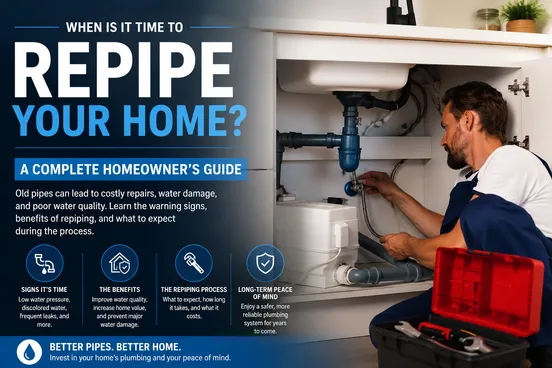
When to Consider Whole-Home Repiping: A Comprehensive Guide for Homeowners
Your home's plumbing system is the circulatory network that keeps your property functioning smoothly, delivering clean water and removing waste efficiently. However, like any infrastructure component, pipes deteriorate over time, potentially compromising your home's safety, comfort, and value. Understanding when to consider whole-home repiping can save you from costly emergency repairs, health hazards, and ongoing frustration with your home plumbing system[cite: 4].
Many homeowners face the challenging decision of whether to continue patching individual plumbing problems or invest in a comprehensive pipe replacement solution. This decision becomes particularly critical when dealing with aging infrastructure, frequent repairs, or persistent water quality issues. The signs aren't always obvious, and the investment can seem substantial, making professional guidance essential.
This comprehensive guide will walk you through the key indicators that signal it's time for whole-home repiping, explore the benefits of modern piping materials, and provide valuable insights into the repiping process. Whether you're experiencing frequent leaks, poor water pressure, or concerns about outdated pipe materials, this information will help you make an informed decision about your property's plumbing infrastructure and determine the optimal timing for this significant home improvement investment.
Introduction to Whole-Home Repiping
Whole-home repiping involves the complete replacement of your property's existing plumbing infrastructure with new pipes and fittings throughout the entire structure. This comprehensive plumbing maintenance solution goes beyond simple repairs or partial replacements, addressing the entire water supply and distribution system from the main water line connection to every fixture in your home.
The process typically includes replacing both hot and cold water supply lines, though it may not necessarily involve drain and sewer lines unless specifically required. Modern repiping projects utilize advanced materials like copper, PEX, or CPVC pipes, which offer superior durability, longevity, and performance compared to older materials commonly found in homes built several decades ago.
Homeowners might need whole-home repiping for several compelling reasons. Properties built before 1960 often contain galvanized steel pipes that corrode over time, restricting water flow and contaminating water quality. Homes constructed between 1960 and 1990 may have polybutylene pipes, which are prone to failure and may not be covered by insurance policies. Additionally, properties with lead pipes pose serious health risks and require immediate replacement to ensure safe drinking water.
The decision to pursue whole-home repiping typically arises when repair costs become excessive, when multiple plumbing issues occur simultaneously, or when homeowners want to proactively upgrade their plumbing infrastructure before problems escalate. This investment not only resolves current plumbing challenges but also provides peace of mind and long-term reliability for decades to come.
Signs You Need Whole-Home Repiping
Recognizing the warning signs that indicate when to consider whole-home repiping can help you address problems before they become catastrophic and expensive. Several key indicators suggest that your home's plumbing system may require comprehensive replacement rather than continued piecemeal repairs.
Frequent leaks and plumbing repairs represent one of the most obvious signs that your piping system is failing. If you're calling plumbers repeatedly for different leaks throughout your home, the underlying infrastructure is likely deteriorating. Multiple leak points indicate systemic pipe failure rather than isolated incidents. When repair costs accumulate and exceed 50% of replacement costs, whole-home repiping becomes the more economical long-term solution.
Reduced water pressure throughout multiple fixtures often signals internal pipe corrosion or mineral buildup that restricts water flow. While individual fixture problems might indicate localized issues, widespread pressure reduction suggests that your pipes are internally compromised. This problem typically worsens over time as corrosion continues to narrow the internal pipe diameter, eventually making normal water usage frustrating and inefficient.
Discolored or bad-tasting water frequently indicates pipe corrosion, rust, or contamination within your plumbing system. Brown, yellow, or reddish water often signals iron pipe corrosion, while metallic tastes may indicate various pipe material degradation. These issues not only affect water quality but can also stain fixtures, clothing, and dishes while potentially impacting your family's health and comfort.
Old pipe materials present significant concerns, particularly lead pipes dangers and galvanized steel systems. Lead pipes, common in homes built before 1930, pose serious health risks including neurological damage, especially in children. Galvanized pipes, popular from 1930 to 1960, corrode internally and externally, leading to reduced water pressure, leaks, and water quality issues. Polybutylene pipes, installed between 1978 and 1995, are prone to sudden failure and may void insurance coverage.
Unexplained water bill increases often indicate hidden leaks within your plumbing system. When your water usage patterns remain consistent but bills continue rising, underground or behind-wall leaks may be occurring. These hidden leaks can cause significant property damage while wasting thousands of gallons of water monthly, making early detection and comprehensive repiping a wise investment[cite: 4].
Benefits of Whole-Home Repiping
Investing in whole-home repiping provides numerous advantages that extend far beyond simply fixing current plumbing problems. These benefits make the initial investment worthwhile for homeowners seeking long-term solutions and improved property value.
Improved water quality represents one of the most immediate and noticeable benefits of pipe replacement. New pipes eliminate rust, corrosion, and mineral buildup that contaminate your water supply, resulting in cleaner, better-tasting water throughout your home. Modern piping materials don't leach harmful substances into your water, ensuring that your family has access to safe, clean water for drinking, cooking, and bathing. This improvement is particularly significant when replacing lead pipes or heavily corroded galvanized systems.
Enhanced home safety becomes a critical consideration when dealing with aging plumbing infrastructure. Old pipes are more likely to burst suddenly, potentially causing flooding, water damage, and mold growth. New piping systems provide reliable water containment and distribution, reducing the risk of catastrophic failures that could damage your property or endanger your family. Additionally, eliminating lead pipes dangers protects your household from serious health risks associated with lead exposure.
Increased property value makes repiping an excellent investment in your home's future marketability. Real estate professionals consistently report that homes with updated plumbing systems command higher prices and sell faster than properties with aging infrastructure. Potential buyers view new plumbing as a significant advantage, eliminating concerns about immediate repair needs and providing confidence in the property's condition. This value increase often offsets a substantial portion of the repiping investment.
Reduced plumbing issues provide ongoing peace of mind and cost savings. New pipes are significantly less likely to develop leaks, clogs, or failures, dramatically reducing your need for emergency plumbing services and repairs[cite: 4]. This reliability translates into lower maintenance costs and fewer disruptions to your daily routine, making the initial investment pay dividends through reduced ongoing expenses and improved quality of life.
Types of Piping Materials for Repiping
Selecting the appropriate piping material for your whole-home repiping project significantly impacts performance, longevity, and cost. Understanding the characteristics of different materials helps homeowners make informed decisions based on their specific needs, budget, and local building requirements.
Copper pipes have long been considered the gold standard for residential plumbing due to their exceptional durability and reliability. Copper naturally resists corrosion and bacterial growth, providing excellent water quality and system longevity often exceeding 70 years. These pipes handle both hot and cold water applications effectively and maintain their integrity under varying pressure conditions. However, copper represents the most expensive piping option and requires skilled installation techniques. Additionally, copper can be susceptible to acidic water conditions and may develop pinhole leaks in certain water chemistry environments.
PVC pipes offer an economical solution primarily suitable for cold water applications and drain lines. PVC provides excellent chemical resistance and doesn't corrode like metal alternatives, making it ideal for specific plumbing applications. These pipes are lightweight, easy to install, and cost-effective for large projects. However, PVC cannot handle hot water applications, limiting its use in whole-home repiping projects unless combined with other materials for hot water lines. The material can also become brittle over time, particularly when exposed to UV light or extreme temperature variations.
CPVC pipes extend PVC's capabilities by adding chlorination that allows hot water handling up to 180°F. This material provides many of PVC's benefits while accommodating both hot and cold water distribution throughout your home. CPVC resists corrosion and scale buildup while offering relatively easy installation and moderate costs. Nevertheless, CPVC can become brittle with age and may crack under stress or impact. Some areas have experienced widespread CPVC failures, leading to insurance and warranty concerns that homeowners should investigate before selection.
PEX pipes have gained significant popularity due to their flexibility, ease of installation, and excellent performance characteristics. PEX resists freezing damage better than rigid materials and can be installed with fewer joints, reducing potential leak points. This material handles both hot and cold water effectively while offering resistance to scale and chlorine damage. PEX installation often costs less than copper while providing comparable longevity and performance. However, PEX cannot be used outdoors due to UV sensitivity and may not be suitable for areas with extremely high water temperatures or certain chemical conditions.
The Repiping Process Explained
Understanding the comprehensive repiping process helps homeowners prepare for this significant home improvement project and set appropriate expectations for timeline, disruption, and outcomes. Professional plumbing assessment and systematic execution ensure optimal results and long-term satisfaction.
Initial assessment and cost estimation begins with a thorough evaluation of your existing plumbing system. Professional plumbers inspect accessible pipes, test water pressure and quality, and identify problem areas throughout your property. This assessment includes examining pipe materials, age, condition, and current performance issues. Plumbers also evaluate your home's layout, accessibility challenges, and local building code requirements that may impact the project scope and approach. During this phase, professionals provide detailed estimates including material costs, labor requirements, timeline projections, and any necessary permit fees.
The assessment process involves testing water pressure at multiple fixtures, checking for hidden leaks using specialized detection equipment, and examining pipe connections in crawl spaces, basements, and utility areas. Professionals also consider your household's specific water usage patterns and future needs to ensure the new system will adequately serve your requirements. This comprehensive evaluation provides the foundation for accurate project planning and realistic cost projections.
Choosing materials requires careful consideration of your budget, local building codes, water chemistry, and long-term performance expectations. Professional plumbers help homeowners understand the advantages and limitations of different piping materials based on their specific situation. Factors such as local water quality, temperature extremes, soil conditions, and building structure influence material selection decisions.
The material selection process includes reviewing manufacturer warranties, local supplier availability, and installer expertise with different products. Professionals also consider future maintenance requirements and potential expansion needs when recommending optimal materials for your specific application.
Step-by-step process overview typically begins with obtaining necessary permits and scheduling utility shutoffs. Installers then systematically remove old pipes while installing new distribution lines throughout your home. The process usually starts with main supply lines and progresses to individual fixture connections. Professional crews work to minimize disruption by completing sections systematically and restoring water service to portions of your home as work progresses.
Installation involves careful routing of new pipes through existing pathways or creating new access routes as needed. Professionals ensure proper pipe support, appropriate insulation, and correct connection techniques throughout the system. The process includes pressure testing all new lines before connecting fixtures and conducting comprehensive system checks before project completion.
Post-repiping inspections ensure that your new plumbing system meets all building codes and performance standards. Professional inspectors verify proper installation techniques, adequate water pressure, and system integrity throughout your home. This phase includes testing all fixtures, checking for leaks, and confirming that water quality meets expectations. Final inspections also verify that all permits are properly closed and that your system complies with local building requirements.
Cost Considerations for Whole-Home Repiping
Understanding repiping costs helps homeowners budget appropriately and make informed decisions about materials and project scope. Several factors influence the total investment required for whole-home repiping projects.
Average costs by material vary significantly based on pipe type and installation complexity. Copper piping typically represents the highest cost option, with material and installation costs ranging from $8,000 to $16,000 for average-sized homes. PEX piping offers a more economical alternative, with total project costs typically ranging from $4,000 to $12,000 depending on home size and complexity. CPVC falls between these options, while PVC combinations for specific applications may reduce overall costs further.
These cost ranges include materials, labor, permits, and basic restoration work, though extensive wall repairs or fixture updates may require additional investment. Professional contractors provide detailed estimates based on your specific home layout and material preferences.
Factors influencing costs include home size, pipe accessibility, local labor rates, and permit requirements. Multi-story homes or properties with limited crawl space access typically require more labor and time, increasing overall project costs. Geographic location significantly impacts both material and labor costs, with urban areas generally commanding higher prices than rural locations.
Additional factors include the extent of wall or ceiling repairs needed, whether fixture updates are included, and local building code requirements that may mandate specific materials or installation techniques[cite: 4]. Emergency or expedited timelines also typically increase project costs.
Potential savings in the long run make repiping a wise investment despite the initial expense. New plumbing systems dramatically reduce repair costs, emergency service calls, and water waste from hidden leaks. Improved energy efficiency from better insulation and reduced heat loss can lower utility bills significantly over time.
Insurance savings may also apply, as some providers offer discounts for homes with updated plumbing systems. Additionally, the increased property value and improved marketability provide substantial returns on investment when selling your home.
Finding the Right Plumbing Service
Selecting qualified professionals for your repiping project ensures optimal results and protects your investment. The complexity of whole-home repiping requires experienced contractors with proven expertise in residential plumbing systems.
How to choose a reputable plumber begins with verifying proper licensing and insurance coverage. Research potential contractors through online reviews, Better Business Bureau ratings, and referrals from friends or neighbors who have completed similar projects. Look for companies with extensive experience in whole-home repiping specifically, as this specialized work requires different skills than routine plumbing repairs.
Evaluate contractors based on their communication skills, willingness to provide detailed estimates, and ability to explain the repiping process clearly. Professional plumbers should offer comprehensive warranties on both materials and workmanship while providing realistic timelines and cost projections.
Questions to ask potential contractors include inquiring about their experience with your specific pipe materials and home type. Ask for recent customer references and examples of similar projects they've completed. Discuss their approach to minimizing disruption during installation and their process for handling unexpected complications that may arise during the project.
Important questions also cover warranty terms, cleanup procedures, permit handling, and their policy for addressing any issues that develop after project completion. Professional contractors should provide clear answers and detailed written proposals addressing all aspects of your project.
Checking licenses and insurance protects homeowners from liability and ensures work meets professional standards. Verify that contractors hold current plumbing licenses in your area and maintain adequate liability insurance coverage. Request proof of insurance and confirm coverage directly with insurance providers when necessary.
Professional contractors readily provide license numbers and insurance documentation while encouraging homeowners to verify their credentials independently. This transparency indicates professionalism and confidence in their qualifications and service quality.
Maintenance Tips After Repiping
Proper maintenance after repiping ensures optimal performance and maximizes your investment in new plumbing infrastructure. Implementing consistent plumbing maintenance practices helps prevent problems and extends system longevity.
Regular inspections should include monthly visual checks of exposed pipes for signs of leaks, corrosion, or damage. Look for water stains, mineral deposits, or unusual moisture around pipe connections and fixtures. Annual professional inspections can identify potential issues before they become serious problems, particularly in areas that aren't easily accessible to homeowners.
Professional inspections should include pressure testing, water quality assessment, and examination of pipe supports and connections throughout your system. These comprehensive evaluations help maintain warranty coverage and ensure continued optimal performance.
Water pressure monitoring helps identify developing problems early. Install pressure gauges at key locations to track system performance over time. Normal residential water pressure should range between 40-60 PSI, with consistent readings throughout your home. Sudden pressure changes may indicate developing blockages, leaks, or system problems requiring professional attention.
Monitor pressure regularly and keep records of readings to identify trends or changes that may signal developing issues. Consistent monitoring helps distinguish between normal variations and problems requiring professional intervention.
Drainage cleaning prevents clogs and backups that can stress your new plumbing system. Implement regular drain maintenance using appropriate cleaning methods and avoid chemical drain cleaners that may damage pipes or fixtures. Schedule professional drain cleaning annually or as needed based on your household's usage patterns[cite: 4].
Proper drain maintenance includes using drain screens to catch debris, avoiding disposal of grease or inappropriate materials down drains, and addressing slow drainage promptly before problems worsen.
Tips to prolong pipe lifespan include maintaining appropriate water temperature settings, installing water softening systems in hard water areas, and protecting pipes from freezing during cold weather. Avoid using chemical drain cleaners or other harsh chemicals that may damage pipe materials over time.
Additional longevity tips include fixing leaks promptly, maintaining proper pipe insulation, and ensuring adequate pipe support throughout your system. Regular maintenance and prompt attention to minor issues prevent small problems from developing into major repairs that could compromise your new plumbing investment.
Implementing these maintenance practices helps ensure that your new plumbing system provides decades of reliable service while maintaining optimal performance and protecting your investment in whole-home repiping.
Conclusion
Recognizing when to consider whole-home repiping requires careful evaluation of your current plumbing system's performance, age, and reliability. The warning signs we've discussed—frequent leaks, reduced water pressure, discolored water, outdated pipe materials, and rising water bills—all indicate that your plumbing infrastructure may be failing and requiring comprehensive replacement rather than continued repairs.
The benefits of whole-home repiping extend far beyond solving immediate problems, providing improved water quality, enhanced safety, increased property value, and long-term reliability. Modern piping materials offer superior performance and longevity compared to older systems, making this investment a wise choice for homeowners seeking lasting solutions to their plumbing challenges.
Understanding the repiping process, cost considerations, and material options helps you make informed decisions about this significant home improvement project. Working with qualified professionals ensures optimal results and protects your investment through proper installation and comprehensive warranties.
The key to success lies in recognizing problems early, consulting with experienced professionals for thorough assessments, and taking proactive steps to address plumbing infrastructure needs before they become emergencies. Your home's plumbing system is too important to ignore, and investing in quality repiping provides peace of mind and long-term value for your property.
Ready to assess your home's plumbing needs? Contact TK Plumbing at 941-392-3846 for a comprehensive plumbing inspection and expert evaluation of your system[cite: 4]. Our experienced professionals provide detailed assessments and honest recommendations to help you make informed decisions about your home's plumbing infrastructure. Visit tkplumbing941.com to learn more about our repiping services and schedule your consultation today[cite: 4].