
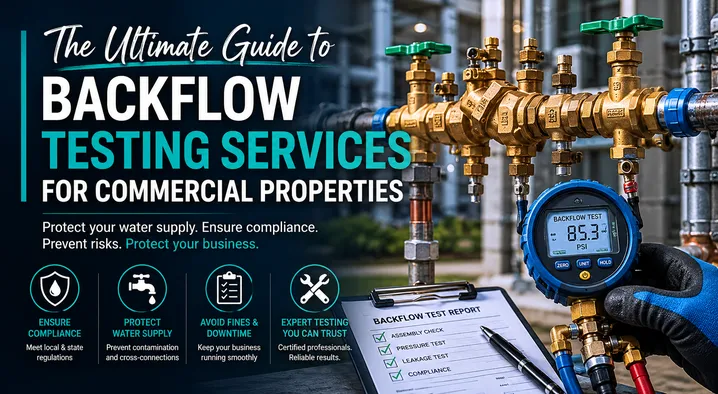
The Ultimate Guide to Backflow Testing Services for Commercial Properties
Water contamination in commercial properties poses serious health risks and legal liabilities that no business owner can afford to ignore. When clean water flows backward through plumbing systems, it can become contaminated with chemicals, bacteria, and other dangerous substances, creating hazardous conditions for employees, customers, and tenants. This phenomenon, known as backflow, represents one of the most critical yet often overlooked aspects of commercial property management.
Understanding backflow testing services is essential for maintaining water safety, ensuring regulatory compliance, and protecting your investment. Whether you manage an office building, restaurant, retail space, or industrial facility, proper backflow prevention directly impacts your business operations and reputation. The consequences of neglecting these systems can range from health department violations and costly fines to serious illness outbreaks that devastate your business.
This comprehensive guide will walk you through everything you need to know about backflow testing services, from understanding the fundamental concepts to implementing effective prevention strategies. You'll discover how to choose qualified professionals, navigate testing requirements, and maintain systems that protect your property and its occupants for years to come.
Introduction to Backflow Testing
Backflow occurs when water flows in the opposite direction from its intended path within a plumbing system, potentially allowing contaminated water to enter the clean water supply. This reversal happens when there's a sudden drop in water pressure, creating a vacuum that pulls water backward through pipes, fixtures, and connections. The contaminated water can contain anything from soap and cleaning chemicals to sewage, pesticides, and industrial waste, depending on where the backflow originates.
The implications of backflow extend far beyond simple inconvenience. When contaminated water enters the potable water system, it can spread throughout an entire building or even affect the municipal water supply. Commercial properties face particularly high risks because they typically have complex plumbing systems with multiple connection points, cross-connections between potable and non-potable water sources, and various appliances that can create backflow conditions.
Backflow testing represents the systematic evaluation of prevention devices and systems designed to stop this dangerous water reversal. Professional technicians use specialized equipment to verify that backflow prevention assemblies function correctly under various pressure conditions. This testing process ensures that protective barriers remain intact and effective, preventing contamination events that could endanger public health and expose property owners to significant liability.
Why Backflow Prevention is Essential
The risks associated with backflow in commercial plumbing systems encompass both immediate health dangers and long-term business consequences that can prove devastating. When contaminated water enters the potable water supply, it can cause serious illnesses including gastrointestinal infections, respiratory problems, and skin conditions. In commercial settings where large numbers of people consume or use the water daily, a single backflow event can affect hundreds of individuals simultaneously, creating a public health emergency.
Commercial properties face unique vulnerabilities that make backflow prevention absolutely critical. Restaurants and food service establishments risk contaminating their entire food preparation process, potentially causing widespread foodborne illness that can permanently damage their reputation and result in lawsuits. Healthcare facilities must protect vulnerable patients whose compromised immune systems make them particularly susceptible to waterborne pathogens. Office buildings and retail spaces have responsibility for the safety of employees, customers, and visitors who expect clean, safe water from drinking fountains, restrooms, and food service areas.
Legal requirements for backflow prevention in commercial properties vary by jurisdiction but are universally strict and rigorously enforced. Most municipalities require annual testing of backflow prevention devices, with detailed documentation and immediate repair of any deficiencies. Property owners who fail to maintain proper backflow prevention systems face substantial fines, forced business closures, and potential criminal liability if contamination events cause illness or death. Insurance companies may also deny claims related to backflow incidents if proper prevention measures weren't in place.
The potential health hazards from contaminated water extend beyond acute illness to include long-term health effects from exposure to industrial chemicals, heavy metals, and persistent organic pollutants. These substances can accumulate in the body over time, causing cancer, neurological damage, and reproductive problems that may not manifest for years after exposure. Commercial property owners have both moral and legal obligations to prevent such exposures through proper backflow prevention measures.
Understanding Backflow Testing Services
Backflow testing services encompass a comprehensive evaluation process that examines every component of a property's backflow prevention system to ensure optimal performance and regulatory compliance. Professional technicians begin by identifying all cross-connections and potential contamination sources throughout the commercial property, mapping the complete plumbing system to understand water flow patterns and pressure dynamics. This systematic approach ensures that no potential backflow points are overlooked during the testing process.
The testing process involves multiple sophisticated procedures designed to simulate real-world conditions that could cause backflow events. Technicians use calibrated test equipment to measure pressure differentials, check valve operation, and relief valve function under various scenarios. They verify that backflow prevention devices respond appropriately to pressure changes and maintain proper sealing to prevent contamination. Documentation throughout this process creates a detailed record of system performance and any deficiencies requiring attention.
Several types of backflow prevention devices serve different commercial applications, each requiring specific testing procedures and maintenance protocols. Reduced pressure principle assemblies offer the highest level of protection and are typically required for high-hazard applications like industrial facilities and healthcare institutions. Double check valve assemblies provide adequate protection for moderate-hazard situations commonly found in office buildings and retail spaces. Pressure vacuum breakers and atmospheric vacuum breakers serve specific applications where other devices may not be practical or cost-effective.
Testing frequency requirements typically mandate annual inspections for most commercial backflow prevention devices, though some high-risk applications may require more frequent evaluation. Newly installed systems must undergo initial testing before activation, and any repairs or modifications trigger additional testing requirements. Property owners must maintain detailed records of all testing activities, including test results, repair documentation, and certification renewals, as regulatory agencies regularly audit these records during inspections.
Choosing the Right Plumbing Service for Backflow Testing
Selecting qualified professionals for backflow testing services requires careful evaluation of credentials, experience, and service capabilities that directly impact the safety and compliance of your commercial property. The complexity of modern commercial plumbing systems demands technicians with specialized training and certification in backflow prevention, as improper testing or repairs can create serious safety hazards and regulatory violations. Property owners must verify that potential service providers possess current certifications from recognized training organizations and maintain proper licensing in their jurisdiction.
Experience with commercial plumbing systems represents a critical factor in choosing backflow testing services, as commercial properties present unique challenges that differ significantly from residential applications. Look for companies that regularly service properties similar to yours in size, complexity, and industry sector. A plumbing service with extensive experience in restaurants will understand the specific backflow risks associated with commercial kitchen equipment, while a company specializing in industrial facilities will be familiar with chemical cross-connection hazards and specialized prevention devices.
When evaluating potential contractors, ask specific questions about their testing procedures, equipment calibration practices, and documentation protocols. Inquire about their response time for emergency plumbing situations, as backflow prevention device failures often require immediate attention to maintain water safety. Request references from other commercial property owners and verify that the company maintains proper insurance coverage for liability and workers' compensation. A reputable service provider will readily provide this information and demonstrate transparency in their business practices.
Certifications and licenses represent non-negotiable requirements for backflow testing services, as unqualified technicians can miss critical safety issues or improperly install prevention devices. Verify that technicians hold current backflow prevention assembly tester certification from organizations like the American Society of Sanitary Engineering or equivalent regional bodies. Confirm that the plumbing company maintains proper state and local licenses for commercial plumbing work, and check with regulatory agencies to ensure no outstanding violations or complaints against the company. These credentials provide assurance that your backflow testing will meet professional standards and regulatory requirements.
The Backflow Testing Process Explained
The backflow testing process begins with a comprehensive site assessment where certified technicians evaluate the entire commercial plumbing system to identify all backflow prevention assemblies and potential cross-connection points. This initial survey involves reviewing building plans, inspecting mechanical rooms, and examining connections to irrigation systems, fire suppression equipment, and specialized machinery that could create backflow conditions. Technicians document the location, type, and condition of each backflow prevention device, creating a detailed inventory that guides the testing procedure.
Preparation for actual testing involves shutting down affected water systems and notifying building occupants about temporary service interruptions. Technicians verify that their test equipment has current calibration certificates and meets manufacturer specifications for accuracy and reliability. They establish controlled testing conditions by isolating the backflow prevention assembly from the rest of the plumbing system and ensuring that downstream pressure can be safely manipulated without affecting other building operations.
The core testing procedure evaluates each component of the backflow prevention assembly under simulated pressure conditions that replicate real-world scenarios where backflow might occur. For reduced pressure principle assemblies, technicians test the differential pressure relief valve, first check valve, and second check valve independently and in combination. They measure pressure drops across each valve and verify that relief valves open at proper pressure differentials to prevent backflow. Double check valve assemblies undergo similar testing with focus on check valve sealing and pressure maintenance capabilities.
Advanced testing techniques employ electronic monitoring equipment that provides precise measurements and detailed data logging throughout the evaluation process. Technicians use differential pressure gauges, flow meters, and electronic data collectors to document system performance and identify subtle deficiencies that might not be apparent through visual inspection alone. This comprehensive approach ensures that backflow prevention systems will perform reliably under actual operating conditions and provides detailed documentation for regulatory compliance.
Upon completion of testing procedures, technicians compile comprehensive reports that document all findings, including test results, deficiencies identified, and recommendations for repairs or improvements. These reports include detailed measurements, photographs of equipment conditions, and clear explanations of any issues requiring attention. Property owners receive copies of all documentation along with guidance on scheduling necessary repairs and maintaining compliance with regulatory requirements.
Common Issues Found During Backflow Testing
During routine backflow testing, technicians frequently encounter defects that compromise system effectiveness and require immediate attention to maintain water safety and regulatory compliance. Check valve failures represent the most common problem, occurring when rubber seals deteriorate, debris accumulates in valve seats, or mechanical components wear beyond acceptable tolerances. These failures allow water to flow backward through the prevention assembly, potentially contaminating the potable water supply with dangerous substances from downstream sources.
Relief valve malfunctions constitute another significant category of defects that can render backflow prevention systems ineffective. These valves must open at precise pressure differentials to prevent backflow conditions, but they often fail due to mineral buildup, corrosion, or spring fatigue. When relief valves stick closed, they cannot provide proper protection against backflow events. Conversely, valves that remain partially open waste water and may indicate underlying pressure problems that require investigation and correction.
Pressure differential issues frequently arise in commercial properties where complex plumbing systems create challenging operating conditions for backflow prevention devices. Insufficient pressure differential across check valves indicates that the devices may not provide adequate protection against backflow. Excessive pressure drops can signal internal damage or improper installation that compromises system performance. These conditions often require adjustment of system pressures or replacement of prevention assemblies to restore proper operation.
The costs associated with backflow prevention repairs vary significantly depending on the type and extent of deficiencies identified during testing. Simple valve adjustments or cleaning procedures may cost only a few hundred dollars, while complete assembly replacement can require several thousand dollars for complex commercial installations. Emergency plumbing situations involving backflow prevention failures often carry premium pricing due to the urgent nature of repairs and potential need for after-hours service. Property owners should budget for both routine maintenance costs and unexpected repair expenses to ensure continuous protection against backflow events.
Preventative measures can significantly reduce the likelihood of backflow prevention system failures and associated repair costs. Regular plumbing maintenance services that include inspection and cleaning of backflow prevention assemblies help identify potential problems before they cause system failures. Proper water treatment to reduce mineral buildup and corrosion extends the life of prevention devices and reduces maintenance requirements. Training building maintenance staff to recognize signs of backflow prevention problems enables early detection and prompt correction of developing issues.
Maintaining Backflow Prevention Systems
Regular maintenance of backflow prevention systems extends far beyond annual testing requirements and plays a crucial role in ensuring continuous water safety and regulatory compliance for commercial properties. Property owners should implement comprehensive maintenance schedules that include monthly visual inspections of backflow prevention assemblies, checking for signs of leakage, corrosion, or physical damage that could compromise system performance. These routine inspections help identify developing problems before they cause system failures or create safety hazards.
Preventive maintenance protocols should address environmental factors that affect backflow prevention device performance, including protection from freezing temperatures, excessive heat, and physical damage from building operations. Installing proper enclosures or insulation around outdoor assemblies prevents freeze damage that can crack valve bodies and render devices inoperative. Regular cleaning of debris and vegetation from around prevention assemblies ensures proper drainage and accessibility for testing and repairs.
Water quality management represents another critical aspect of backflow prevention system maintenance that directly impacts device longevity and reliability. Properties with hard water or aggressive water chemistry should consider water treatment systems that reduce mineral buildup and corrosion in backflow prevention assemblies. Regular flushing of prevention devices removes accumulated sediment and debris that can interfere with proper valve operation and cause premature failure.
The importance of timely repairs cannot be overstated when backflow prevention deficiencies are identified during testing or routine inspections. Delaying necessary repairs creates serious liability risks and may result in regulatory violations that carry substantial penalties. Commercial property owners should establish relationships with qualified plumbing inspection professionals who can respond quickly to backflow prevention emergencies and perform repairs that meet regulatory standards and manufacturer specifications.
Scheduling routine plumbing maintenance services helps ensure that backflow prevention systems receive proper attention throughout the year rather than only during annual testing periods. Professional maintenance visits should include detailed inspection of all prevention assemblies, cleaning and adjustment of components as needed, and documentation of system condition and performance. This proactive approach helps prevent unexpected failures and ensures continuous protection against backflow events that could endanger building occupants and create legal liability for property owners.
Cost Considerations for Backflow Testing Services
The average costs associated with backflow testing services for commercial properties vary significantly based on system complexity, device types, and local market conditions, but property owners should expect annual testing expenses ranging from several hundred to several thousand dollars depending on their specific requirements. Simple installations with single backflow prevention assemblies typically cost between $150 and $300 for annual testing, while complex commercial properties with multiple assemblies and specialized equipment may require $1,000 to $3,000 or more for comprehensive testing services.
Several factors influence pricing for backflow testing services, including the geographic location of the property, accessibility of prevention assemblies, and complexity of testing procedures required for specific device types. Urban areas with higher labor costs and strict regulatory requirements typically command premium pricing for backflow testing services. Properties where prevention assemblies are located in difficult-to-access areas such as underground vaults or confined spaces may incur additional charges for specialized equipment and safety procedures required for proper testing.
The type and number of backflow prevention devices significantly impact testing costs, as different assemblies require varying amounts of time and specialized equipment for proper evaluation. Reduced pressure principle assemblies generally cost more to test than double check valve assemblies due to their increased complexity and more rigorous testing requirements. Large commercial properties with numerous prevention devices may benefit from volume pricing arrangements that reduce per-device testing costs while ensuring comprehensive system evaluation.
Budgeting for backflow prevention in commercial properties should include both routine testing expenses and potential repair costs that may arise during system evaluation. Property owners should allocate funds for unexpected repairs or device replacements that may be necessary to maintain regulatory compliance and water safety. Emergency plumbing services for backflow prevention failures often carry premium pricing, making preventive maintenance and timely repairs a cost-effective investment in long-term system reliability.
Additional cost considerations include potential fines and penalties for non-compliance with backflow testing requirements, which can far exceed the cost of proper testing and maintenance. Properties that fail to maintain current testing documentation or address identified deficiencies may face regulatory enforcement actions that include substantial monetary penalties and forced business closures. The indirect costs of backflow events, including liability for illness or injury, property damage, and business interruption, can dwarf the investment required for proper prevention and testing services.
Conclusion and Next Steps
Backflow testing services represent a critical investment in the safety, compliance, and long-term success of any commercial property operation. The comprehensive evaluation and maintenance of backflow prevention systems protects building occupants from serious health hazards while ensuring compliance with strict regulatory requirements that govern commercial water systems. Property owners who prioritize proper backflow testing demonstrate their commitment to safety and professional management practices that enhance their reputation and protect their investment.
The complexity of modern commercial plumbing systems demands professional expertise and specialized equipment that only qualified service providers can deliver effectively. Attempting to cut costs by neglecting proper backflow testing or using unqualified technicians creates enormous risks that far outweigh any short-term savings. The potential consequences of backflow events, including serious illness, regulatory violations, and legal liability, make professional backflow testing services an essential component of responsible property management.
Moving forward, commercial property owners should establish comprehensive backflow prevention programs that include regular testing, preventive maintenance, and prompt repair of any deficiencies identified during system evaluation. Building relationships with qualified plumbing maintenance services providers ensures access to expert support when needed and helps maintain continuous protection against backflow hazards. Regular communication with regulatory agencies helps property owners stay current with evolving requirements and best practices in backflow prevention.
Ready to protect your commercial property with professional backflow testing services? TK Plumbing provides comprehensive backflow testing and commercial plumbing services throughout the region, with certified technicians who understand the unique requirements of commercial properties. Our experienced team offers reliable testing, prompt repairs, and ongoing maintenance support to keep your backflow prevention systems operating safely and efficiently. Contact TK Plumbing today at 941-392-3846 or visit https://tkplumbing941.com/ to schedule your backflow testing and ensure the continued safety and compliance of your commercial property.