
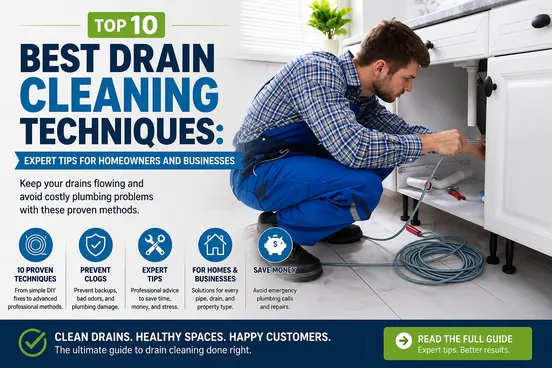
Top 10 Best Drain Cleaning Techniques: Expert Tips for Homeowners and Businesses
Introduction to Drain Cleaning
Maintaining clean, functional drains is one of the most critical yet overlooked aspects of property management for homeowners and businesses alike. Whether you're managing a residential property, operating a busy restaurant, or overseeing a commercial building, understanding the best drain cleaning techniques can save you thousands of dollars in emergency repairs and prevent costly downtime.
Clogged drains don't just create inconvenience—they can lead to serious plumbing emergencies, water damage, and health hazards. From kitchen sinks backing up during dinner service to bathroom drains overflowing in office buildings, drain problems strike at the worst possible moments. The good news is that most drain issues are entirely preventable with proper maintenance and the right cleaning techniques.
This comprehensive guide will walk you through proven methods that professional plumbers use, along with effective DIY solutions that property owners can implement. We'll explore everything from basic manual cleaning to advanced hydro jetting techniques, helping you determine when to handle drain cleaning yourself and when to call in the professionals. By implementing these strategies, you'll maintain optimal plumbing performance, extend the life of your drainage system, and avoid the stress and expense of emergency plumbing situations.
Understanding Drain Blockages
Before diving into cleaning techniques, it's essential to understand what causes drain blockages and how to identify warning signs early. Different types of properties face unique challenges when it comes to drain maintenance, and recognizing these patterns is crucial for effective prevention.
The most common culprits behind drain clogs include grease and oil buildup, particularly problematic in restaurant kitchens where cooking oils solidify in pipes. Hair accumulation affects bathroom drains in residential and commercial properties, while food particles create stubborn blockages in garbage disposals and kitchen sinks. Soap scum, mineral deposits from hard water, and foreign objects also contribute to drainage problems across all property types.
Early warning signs include slow drainage, gurgling sounds from pipes, unpleasant odors emanating from drains, and water backing up during use. In commercial settings, multiple drains experiencing simultaneous issues often indicate a more serious blockage in the main sewer line. Property managers should pay attention to recurring clogs in the same locations, as this suggests underlying problems that require professional attention.
Neglecting drain maintenance creates a domino effect of problems. Minor clogs worsen over time, eventually requiring expensive emergency plumbing services. Standing water in pipes promotes bacterial growth, creating health hazards and foul odors. Severe blockages can cause pipes to burst or sewage to back up into buildings, resulting in property damage, business interruption, and potential liability issues. For restaurants and food service businesses, drain problems can even trigger health department violations and forced closures.
Understanding your property's specific drain challenges allows you to implement targeted prevention strategies and choose the most effective cleaning techniques for your situation.
Best Drain Cleaning Techniques
1. Basic Tools and Equipment Needed
Every property owner should maintain a basic drain cleaning toolkit. Essential items include rubber gloves, a plunger specifically designed for sinks and drains, a flashlight for inspection, and a bucket for collecting debris. Wire brushes help scrub away buildup, while needle-nose pliers can extract visible obstructions. For businesses, investing in commercial-grade tools pays dividends in maintenance efficiency.
2. Manual Cleaning Techniques
Manual cleaning represents the first line of defense against drain clogs and forms the foundation of effective drain maintenance. Start by removing visible debris from drain covers and strainers, which often accumulate hair, food particles, and soap residue. For bathroom drains, carefully extract hair clogs using needle-nose pliers or specialized drain cleaning tools.
Kitchen drains require particular attention to grease removal. Remove drain covers and manually scrape away grease buildup using plastic scrapers or old credit cards. This prevents grease from traveling deeper into the plumbing system where it hardens and creates stubborn blockages.
Regular manual cleaning prevents most minor clogs from developing into major problems. Businesses should implement daily manual cleaning routines, while homeowners benefit from weekly maintenance. This hands-on approach allows early detection of developing issues before they require professional intervention.
3. Chemical Drain Cleaners: Pros and Cons
Chemical drain cleaners offer convenience but come with significant trade-offs that property owners must understand. Commercial drain cleaners use powerful acids or bases to dissolve organic matter and break down clogs. They work quickly on many types of blockages and require minimal effort to use.
However, chemical cleaners pose serious drawbacks. They can damage pipes, particularly older plumbing systems with metal components. Repeated use weakens pipe joints and seals, potentially creating expensive repair needs. Chemical cleaners also present safety hazards, requiring proper ventilation and protective equipment during use.
Environmental concerns make chemical cleaners problematic for businesses focused on sustainability. These products contaminate water systems and can violate environmental regulations in commercial settings. For restaurants and food service businesses, chemical residues may create health code violations if they contact food preparation areas.
When chemical cleaners are necessary, choose enzyme-based products that break down organic matter without harsh chemicals. These safer alternatives work effectively on grease and food waste while protecting pipes and the environment.
4. DIY Solutions: Baking Soda and Vinegar
Among the best drain cleaning techniques available to property owners, the baking soda and vinegar method stands out for its safety, effectiveness, and accessibility. This natural solution works through a chemical reaction that helps break down organic matter and flush away debris without damaging pipes.
To implement this technique, pour one cup of baking soda down the drain, followed by one cup of white vinegar. Cover the drain with a plug or wet cloth to contain the reaction, allowing the mixture to work for 15-30 minutes. Finish by flushing with hot water to carry away loosened debris.
This method works particularly well for routine maintenance and minor clogs. The alkaline baking soda neutralizes acidic waste, while the effervescent reaction helps dislodge particles. For stubborn clogs, repeat the process or let the mixture sit overnight before flushing.
Businesses can implement this technique as part of regular maintenance routines without safety concerns or environmental impact. The ingredients are inexpensive and readily available, making this approach cost-effective for large properties with multiple drains.
5. Drain Snakes: How to Use Effectively
Drain snakes, also called augers, represent one of the most effective mechanical cleaning tools available. These flexible cables with cutting heads can navigate through pipes to break up clogs and retrieve obstructions that other methods cannot reach.
Manual drain snakes work well for most residential applications and minor commercial clogs. Insert the snake into the drain and rotate the handle while applying gentle pressure. When you feel resistance, continue rotating to break through or hook the obstruction. Slowly withdraw the snake, bringing debris with it.
Electric drain snakes provide more power for stubborn clogs and commercial applications. These tools require proper training to use safely, as excessive force can damage pipes. Property managers should consider professional training for maintenance staff or rely on plumbing services for complex blockages.
When using drain snakes, always start with the smallest appropriate size to avoid pipe damage. Clean and sanitize equipment between uses, particularly in commercial settings where cross-contamination poses health risks.
6. Hydro Jetting: When and Why to Consider
Hydro jetting represents the pinnacle of professional drain cleaning technology and ranks among the best drain cleaning techniques for severe blockages and preventive maintenance. This process uses high-pressure water streams to scour pipes clean, removing grease, scale, and debris that other methods cannot address.
Commercial properties, particularly restaurants and food service businesses, benefit significantly from regular hydro jetting. The process completely removes grease buildup that accumulates despite regular cleaning efforts. Unlike chemical cleaners or mechanical snaking, hydro jetting cleans the entire pipe circumference, restoring full flow capacity.
The technique proves especially valuable for main sewer lines and large-diameter pipes where traditional cleaning methods fall short. Property managers dealing with recurring clogs or slow drainage should consider hydro jetting as a long-term solution rather than repeatedly addressing symptoms.
While hydro jetting requires professional equipment and expertise, the investment pays dividends in reduced emergency calls and extended pipe life. The process can reveal pipe damage or structural issues that need attention, allowing proactive repairs instead of reactive emergency responses.
7. Professional Plumbing Services and Why They Matter
Professional plumbing services provide expertise, equipment, and guarantees that DIY methods cannot match. Licensed plumbers can diagnose underlying problems that cause recurring clogs, such as pipe damage, improper installation, or structural issues affecting drainage.
Professional services become essential when dealing with main sewer line blockages, recurring problems, or situations involving multiple drains. Emergency plumbing services provide 24/7 availability for urgent situations that could cause property damage or business interruption.
For commercial properties, professional plumbing relationships ensure compliance with health codes and building regulations. Regular professional maintenance prevents problems while providing documentation for insurance and regulatory requirements.
Preventative Maintenance Strategies
Implementing comprehensive preventative maintenance strategies represents the most cost-effective approach to drain management for any property type. Regular cleaning schedules prevent minor issues from escalating into expensive emergency repairs while ensuring consistent plumbing performance.
Homeowners should establish weekly drain maintenance routines that include manual cleaning of visible debris, monthly baking soda and vinegar treatments, and quarterly professional inspections. Kitchen drains benefit from daily hot water flushes to prevent grease accumulation, while bathroom drains require regular hair removal to maintain flow.
Commercial properties need more intensive maintenance schedules based on usage patterns and business type. Restaurants should implement daily grease trap cleaning, weekly drain treatments, and monthly professional maintenance. Office buildings can typically manage with bi-weekly cleaning and quarterly professional services, while retail businesses fall somewhere between these extremes.
Property managers should document maintenance activities and track recurring problems to identify patterns that suggest underlying issues. This data helps optimize cleaning schedules and justifies professional services when needed. Training staff on proper drain care practices prevents problems caused by improper use or disposal of inappropriate materials.
Seasonal maintenance considerations include increased attention during heavy-use periods and preparation for weather-related challenges. Winter months may require additional care to prevent freeze-related damage, while summer often brings increased usage that demands more frequent cleaning.
The key to successful preventative maintenance lies in consistency and appropriate technique selection. Properties that implement regular maintenance routines using the best drain cleaning techniques experience fewer emergencies, lower repair costs, and better overall plumbing performance than those relying on reactive approaches.
Choosing the Right Drain Cleaning Service
Selecting professional plumbing services requires careful evaluation of credentials, experience, and service offerings. Licensed plumbers with established local reputations provide the reliability and expertise necessary for effective drain cleaning and maintenance.
When evaluating plumbing services, verify licensing and insurance coverage to protect against liability issues. Experience with your property type matters significantly—commercial properties benefit from plumbers familiar with business requirements and health code compliance, while residential customers need services that understand homeowner concerns and budget constraints.
Service availability plays a crucial role, particularly for businesses that cannot afford extended downtime. Emergency plumbing services with 24/7 availability provide peace of mind for urgent situations, while scheduled maintenance services help prevent emergencies through proactive care.
Cost considerations should balance immediate expenses against long-term value. The cheapest option often proves most expensive when inexperienced technicians cause damage or fail to address underlying problems. Request detailed estimates that explain recommended services and their benefits, allowing informed decision-making.
Ask potential plumbing services about their experience with your specific drain cleaning challenges. Restaurants need plumbers familiar with grease management, while older residential properties require expertise with aging plumbing systems. Commercial buildings benefit from services that understand complex plumbing systems and regulatory requirements.
Equipment and technique availability distinguish professional services from basic repair companies. Services offering hydro jetting, camera inspections, and advanced diagnostic tools provide comprehensive solutions that address both immediate problems and long-term maintenance needs. These capabilities often justify higher costs through more effective problem resolution and prevention.
Conclusion
Mastering the best drain cleaning techniques empowers property owners to maintain efficient plumbing systems while minimizing costs and emergency situations. From basic manual cleaning to advanced hydro jetting, each technique serves specific purposes in comprehensive drain maintenance strategies.
The most successful approach combines regular preventative maintenance with appropriate professional services when needed. Homeowners and businesses that implement consistent cleaning routines using safe, effective methods experience fewer problems and lower long-term costs than those relying solely on reactive repairs.
Remember that drain maintenance represents an investment in property value and operational efficiency. Clean, functional drains prevent water damage, maintain sanitary conditions, and ensure uninterrupted business operations. Whether managing a single-family home or a complex commercial property, proper drain care protects your investment while providing peace of mind.
Don't wait for drain emergencies to disrupt your life or business. Professional plumbing services provide the expertise and equipment necessary for comprehensive drain cleaning and maintenance that keeps your plumbing system operating at peak performance.
Ready to implement professional drain cleaning techniques for your property? Contact TK PLUMBING at (941) 392-3846 or visit https://tkplumbing941.com/ to schedule a comprehensive drain inspection and maintenance service. Our experienced team provides reliable plumbing solutions for homeowners and businesses throughout the area, ensuring your drains stay clean and functional year-round.