
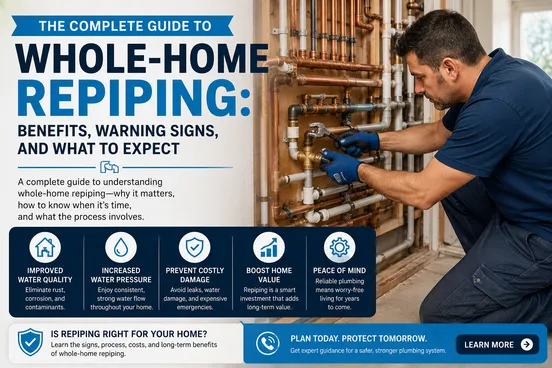
The Complete Guide to Whole-Home Repiping Benefits: Why Upgrading Your Plumbing is Essential
When was the last time you thought about the pipes running behind your walls? Most property owners don't consider their plumbing system until something goes wrong – a burst pipe, discolored water, or consistently low water pressure. However, your home's plumbing infrastructure is one of its most critical systems, and understanding when it needs a complete overhaul can save you thousands of dollars while protecting your property investment.
Whole-home repiping represents a significant decision that affects every aspect of your property's water delivery system. [cite: 2] Whether you're a homeowner dealing with aging pipes, a property manager overseeing multiple units, or a commercial building owner ensuring reliable water service, recognizing the signs and benefits of complete plumbing replacement is essential for maintaining a safe, efficient, and valuable property.
This comprehensive guide will walk you through everything you need to know about whole-home repiping, from identifying warning signs to understanding the long-term benefits that make this investment worthwhile. We'll explore the various materials available, the repiping process itself, and how to choose the right professional team to handle this crucial upgrade to your property's infrastructure.
Introduction to Whole-Home Repiping
Whole-home repiping involves the complete replacement of a property's existing water supply and distribution system. This comprehensive plumbing installation process removes old, deteriorating pipes and replaces them with modern materials designed to provide decades of reliable service. Unlike targeted pipe repair that addresses individual problems, repiping creates an entirely new plumbing infrastructure throughout your property.
The decision to repipe typically stems from several common scenarios. Older homes built before 1970 often contain galvanized steel or iron pipes that have reached the end of their useful life. These materials corrode over time, leading to restricted water flow, contamination, and eventual failure. Properties constructed in the 1970s and 1980s may contain polybutylene pipes, which have proven problematic due to their tendency to become brittle and fail unexpectedly.
Modern repiping projects utilize advanced materials like cross-linked polyethylene (PEX), copper, or high-grade PVC systems that offer superior durability and performance. These materials resist corrosion, provide better water flow, and typically come with extended warranties that protect your investment.
Effective plumbing maintenance requires understanding that pipes, like all building components, have finite lifespans. [cite: 2] Galvanized pipes typically last 40-70 years, while copper pipes can function effectively for 70-80 years. However, factors like water quality, usage patterns, and installation quality can significantly impact these timeframes. Proactive repiping before complete system failure prevents water damage, maintains property value, and ensures consistent water quality for occupants.
Key Benefits of Whole-Home Repiping
The whole-home repiping benefits extend far beyond simply fixing immediate plumbing problems. One of the most significant advantages is dramatically improved water quality and safety. Old pipes, particularly galvanized steel, accumulate rust, mineral deposits, and potentially harmful bacteria over decades of use. These contaminants affect taste, odor, and color while potentially posing health risks to residents. New piping systems provide clean, fresh-tasting water free from metallic tastes and discoloration.
Enhanced property value represents another compelling reason to invest in repiping. Real estate professionals consistently report that updated plumbing systems significantly boost home marketability and sale prices. Potential buyers view modern plumbing as a major selling point, knowing they won't face expensive repairs or replacements in the near future. For commercial property owners, updated plumbing systems attract quality tenants and command higher rental rates. [cite: 2]
The long-term financial benefits of repiping often outweigh the initial investment costs. Older plumbing systems require frequent repairs, emergency service calls, and constant maintenance. Property managers dealing with aging apartment complexes or office buildings understand the frustration and expense of recurring plumbing issues. New systems dramatically reduce these ongoing costs while eliminating the disruption caused by frequent repairs.
Water pressure improvements throughout the property represent an immediate quality-of-life enhancement. Corroded pipes develop internal buildup that restricts water flow, resulting in weak showers, slow-filling fixtures, and inadequate water pressure for appliances. Modern piping materials maintain their internal diameter, ensuring consistent, strong water pressure to all fixtures simultaneously.
Energy efficiency gains provide ongoing cost savings through improved hot water delivery. Old pipes with internal corrosion and mineral buildup force water heaters to work harder, increasing energy consumption. [cite: 2] New pipes allow hot water to reach fixtures faster and maintain temperature more effectively, reducing energy waste and utility bills.
Insurance benefits often accompany repiping projects. Many insurance companies offer premium discounts for properties with updated plumbing systems, recognizing the reduced risk of water damage claims. Some insurers require plumbing updates for older properties to maintain coverage, making repiping essential for continued protection.
The peace of mind that comes with new plumbing cannot be overstated. Property owners sleep better knowing their plumbing system won't fail unexpectedly, causing expensive water damage or leaving occupants without water service. This reliability is particularly crucial for commercial properties where plumbing failures can disrupt business operations and damage valuable equipment or inventory.
Signs Your Home Needs Repiping
Recognizing when your property requires complete repiping rather than simple repairs can save thousands of dollars in damage and ongoing maintenance costs. Frequent leaks throughout the property indicate systemic pipe deterioration that won't improve with individual repairs. When leak detection services identify multiple problem areas or when repairs become monthly occurrences, the underlying pipe infrastructure has likely reached replacement time. [cite: 2]
Water discoloration provides clear evidence of internal pipe corrosion. Brown, yellow, or reddish water indicates rust and mineral deposits breaking free from pipe walls. While this discoloration might be intermittent initially, it typically worsens over time as corrosion progresses. Clear water that develops a metallic taste or unusual odor also suggests pipe deterioration affecting water quality.
Consistently low water pressure throughout multiple fixtures signals pipe restriction from internal buildup. Unlike isolated pressure problems that might affect single fixtures, system-wide pressure issues indicate widespread pipe deterioration. When multiple faucets, showers, and appliances experience reduced flow simultaneously, the main distribution lines likely need replacement.
Age-related factors play crucial roles in repiping decisions. Properties with galvanized steel pipes installed before 1960 almost certainly need replacement. Homes built between 1978 and 1995 may contain problematic polybutylene pipes that should be replaced proactively. Even copper systems installed before 1970 may show signs of deterioration depending on local water conditions.
Visible pipe problems in accessible areas often indicate similar issues throughout hidden portions of the system. Corroded pipes in basements, crawl spaces, or utility areas suggest comparable deterioration behind walls and under floors. Green stains around copper joints, rust flakes on galvanized pipes, or cracked plastic pipes signal system-wide problems.
Water quality testing revealing elevated levels of metals, bacteria, or other contaminants often traces back to deteriorating pipes. Professional water analysis can identify specific problems related to pipe materials and help determine whether targeted treatments or complete replacement offer the best solution.
Mold and mildew problems in walls or ceiling areas may indicate hidden leaks from deteriorating pipes. These slow leaks often go undetected until mold growth or structural damage becomes visible. Professional leak detection can identify these hidden problems and assess whether isolated repairs or complete repiping provides the most effective solution.
Types of Piping Materials Used in Repiping
Modern repiping projects utilize several advanced materials, each offering specific advantages for different applications and budgets. Understanding these options helps property owners make informed decisions based on their specific needs, local building codes, and long-term goals.
Copper pipes remain the gold standard for residential and commercial plumbing installation projects. This time-tested material offers exceptional durability, lasting 70-80 years under normal conditions. Copper naturally resists bacteria growth and provides excellent water quality without affecting taste or odor. Its thermal properties make it ideal for hot water lines, and its strength allows for high-pressure applications. However, copper costs more than alternative materials and requires skilled installation to prevent joint failures.
Cross-linked polyethylene (PEX) tubing has gained tremendous popularity for residential repiping projects due to its flexibility, affordability, and ease of installation. PEX resists freezing better than rigid pipes and can expand slightly without bursting. Its flexibility allows for fewer joints and connections, reducing potential leak points. PEX comes in color-coded varieties (red for hot, blue for cold, white for either) that simplify installation and future maintenance. Installation costs typically run lower than copper due to reduced labor requirements.
PVC and CPVC pipes serve specific applications within repiping projects. Standard PVC works well for cold water lines and drain systems, offering excellent chemical resistance and longevity. CPVC (chlorinated polyvinyl chloride) handles both hot and cold water applications while maintaining PVC's corrosion resistance and affordability. These materials work particularly well in commercial applications where chemical resistance and cost control are priorities.
Galvanized steel pipes, while still found in older properties, are no longer recommended for new installations. Understanding this material helps property owners recognize when replacement becomes necessary. Galvanized pipes develop internal rust and mineral buildup that restricts flow and contaminates water. Their 40-70 year lifespan makes them candidates for replacement in most older properties.
Material selection depends on several factors including local building codes, water conditions, budget constraints, and intended use. Professional plumbing contractors assess these variables to recommend optimal materials for each specific application, ensuring long-term performance and code compliance.
The Repiping Process: What to Expect
Understanding the repiping process helps property owners prepare for this significant undertaking and set appropriate expectations for timeline, disruption, and results. Professional repiping begins with comprehensive inspection and evaluation of the existing system to determine scope, identify potential challenges, and develop detailed project plans.
Initial assessment involves thorough examination of accessible pipes, water pressure testing throughout the property, and evaluation of current fixtures and connections. Professional leak detection services may identify hidden problems that affect project scope. This evaluation phase typically takes several hours and results in detailed recommendations and accurate cost estimates.
Material selection follows the assessment phase, with contractors recommending optimal piping materials based on property needs, local codes, and budget considerations. This decision affects project timeline, costs, and long-term performance. Quality contractors explain the advantages and limitations of different materials, helping property owners make informed choices.
The actual repiping work typically proceeds in phases to minimize disruption to occupants. Contractors often start with main supply lines before moving to branch lines serving individual fixtures. Strategic planning allows for temporary water service during much of the project, though complete shutoffs are necessary during connection phases.
Access requirements vary significantly between properties. Some repiping projects require minimal wall opening, particularly when using flexible PEX materials that can be routed through existing pathways. Others may require more extensive access for proper installation and code compliance. Professional contractors minimize necessary demolition while ensuring proper installation and future accessibility.
Timeline expectations depend on property size, complexity, and material choices. Typical residential repiping projects take 2-5 days for complete installation. Commercial projects may require longer timelines due to size and complexity. Contractors provide detailed schedules and coordinate with property owners to minimize disruption to normal activities.
Post-installation inspection and testing ensure proper installation and code compliance. This includes pressure testing, fixture operation verification, and final inspections by local authorities where required. Professional plumbing maintenance recommendations help property owners protect their investment and maintain optimal system performance for decades.
Cost Considerations for Whole-Home Repiping
Whole-home repiping represents a significant investment that varies widely based on multiple factors affecting both material and labor costs. Understanding these variables helps property owners budget appropriately and make informed decisions about timing and scope.
Property size directly impacts repiping costs, with larger homes and commercial buildings requiring more materials and labor hours. Square footage, number of fixtures, and system complexity all influence final costs. Multi-story properties often cost more due to increased access challenges and longer pipe runs. Commercial properties typically involve higher costs due to larger pipe sizes, more complex routing, and stricter code requirements.
Material selection significantly affects project costs, with copper typically representing the highest initial investment but offering longest lifespan. PEX materials cost less initially but may require replacement sooner than copper systems. Labor costs vary based on material choice, with copper requiring more skilled installation techniques. Property owners should consider total lifetime costs rather than just initial installation expenses.
Access requirements can substantially impact project costs when extensive demolition and restoration become necessary. Properties with finished basements, complex architectural features, or limited crawl space access may require additional labor for proper installation. Contractors assess these factors during initial evaluation to provide accurate cost estimates.
Comparing repiping costs against ongoing repair expenses often reveals long-term savings. Properties requiring frequent pipe repair, emergency service calls, and water damage restoration may spend comparable amounts over several years without achieving the benefits of complete system replacement. Emergency plumbing costs can quickly accumulate, making proactive repiping more cost-effective than reactive repairs. [cite: 2]
Financing options make repiping more accessible for property owners who prefer to spread costs over time. Many contractors offer financing programs, and some utility companies provide rebates for water-efficient upgrades. Home equity loans or lines of credit often provide favorable terms for major home improvements like repiping. Commercial property owners may qualify for business loans or equipment financing for plumbing upgrades.
Insurance considerations can offset repiping costs through premium reductions and improved coverage options. Many insurers offer discounts for updated plumbing systems, and some require upgrades for continued coverage of older properties. The cost of increased insurance premiums or coverage limitations may justify repiping investments independent of other benefits.
Choosing the Right Plumbing Service Provider
Selecting qualified professionals for repiping projects ensures proper installation, code compliance, and long-term system performance. The complexity and importance of repiping require experienced contractors with specific expertise in whole-house plumbing installation rather than general repair services.
Licensing and insurance verification represents the first step in contractor evaluation. Professional plumbing contractors maintain current licenses, liability insurance, and workers' compensation coverage. These credentials protect property owners from liability and ensure contractors meet minimum competency standards. Verify licenses through state licensing boards and request current insurance certificates.
Experience with repiping projects specifically matters more than general plumbing experience. Contractors specializing in sewer line services, drain cleaning, or routine repairs may lack the expertise needed for complex repiping projects. Ask about recent repiping projects, request references from similar properties, and verify experience with your chosen materials.
Detailed written estimates help compare contractors and understand project scope. Quality contractors provide comprehensive proposals including materials specifications, labor breakdown, timeline estimates, and warranty information. Avoid contractors who provide only verbal estimates or pressure for immediate decisions without proper evaluation time.
References and reviews from recent customers provide valuable insights into contractor performance, professionalism, and quality. Contact recent customers directly to discuss their experiences, project outcomes, and any issues encountered. Online reviews offer additional perspectives but should be considered alongside direct references.
Warranty coverage demonstrates contractor confidence in their work and provides protection for your investment. Comprehensive warranties cover both materials and labor for extended periods, typically 1-5 years depending on components. Understand warranty terms, coverage limitations, and procedures for addressing any issues.
Communication and professionalism throughout the evaluation process often predict overall project experience. Contractors who respond promptly, answer questions thoroughly, and provide clear explanations typically deliver better overall service than those who are difficult to reach or provide vague responses.
Conclusion and Next Steps
The whole-home repiping benefits clearly demonstrate why this investment represents one of the most valuable improvements property owners can make. From dramatically improved water quality and pressure to increased property values and reduced maintenance costs, repiping delivers both immediate improvements and long-term advantages that protect and enhance your property investment.
Recognizing the signs that indicate repiping needs – frequent leaks, discolored water, low pressure, and aging pipe materials – allows property owners to act proactively rather than reactively. This proactive approach prevents water damage, reduces emergency repair costs, and ensures continued reliable water service for occupants.
The variety of modern piping materials available today provides options for every budget and application. Whether choosing copper for maximum longevity, PEX for cost-effectiveness and flexibility, or specialized materials for unique requirements, today's options far exceed the performance of older pipe materials while offering extended warranties and improved reliability.
Understanding the repiping process, cost considerations, and contractor selection criteria empowers property owners to make informed decisions and achieve optimal results. Professional plumbing maintenance following repiping ensures your investment continues delivering benefits for decades while protecting your property from water-related damage and disruption.
Take the next step toward protecting and improving your property by assessing your current plumbing system's condition and future needs. Don't wait for emergency situations to force hasty decisions – proactive planning allows for better timing, material selection, and contractor choice while avoiding the stress and expense of plumbing emergencies.
Ready to explore the benefits of whole-home repiping for your property? Contact TK Plumbing today at 941-392-3846 for a comprehensive evaluation of your plumbing system. [cite: 2] Our experienced professionals provide detailed assessments, material recommendations, and transparent pricing to help you make informed decisions about your property's plumbing future. Visit us at https://tkplumbing941.com/ to learn more about our repiping services and schedule your consultation. [cite: 2] Invest in your property's future with professional repiping services that deliver lasting value and peace of mind.