
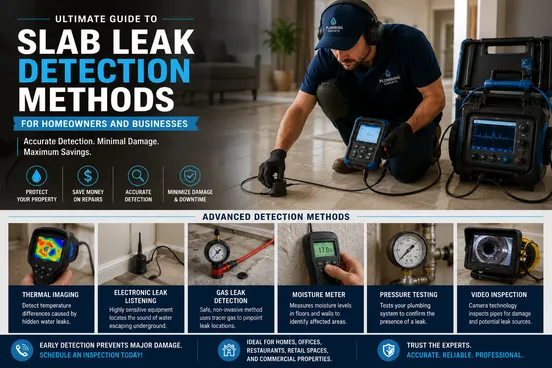
Ultimate Guide to Slab Leak Detection Methods for Homeowners and Businesses
Water damage from hidden leaks can devastate properties, causing thousands of dollars in repairs and compromising structural integrity. Among the most challenging leaks to identify are those occurring beneath concrete slabs, where water lines run underground and out of sight. These hidden threats can silently wreak havoc for months before becoming apparent, making early detection crucial for property protection.
Slab leaks represent one of the most serious plumbing emergencies that property owners face. Unlike visible pipe bursts or dripping faucets, these underground water intrusions operate in stealth mode, gradually undermining foundations and creating perfect conditions for mold growth. The financial implications extend far beyond simple pipe replacement, often requiring extensive foundation work, flooring replacement, and comprehensive water damage restoration.
Whether you manage a commercial building, own residential property, or oversee multiple rental units, understanding effective slab leak detection methods can save you from catastrophic damage and expensive emergency repairs. Professional plumbing services utilize sophisticated techniques to identify these hidden problems before they escalate into major disasters. This comprehensive guide explores proven detection methods, warning signs to monitor, and professional solutions that protect your investment while maintaining the integrity of your plumbing systems.
Introduction to Slab Leaks
Slab leaks occur when water or sewer lines running beneath concrete foundations develop cracks, breaks, or joint failures. These underground pipes, typically installed during construction, carry water throughout buildings and are embedded within or beneath concrete slabs. When these pipes fail, water escapes into surrounding soil and concrete, creating a cascade of problems that can compromise entire structures.
The formation of slab leaks stems from various factors including soil movement, pipe corrosion, poor installation practices, and natural settling of foundations. Copper pipes, commonly used in older construction, are particularly susceptible to electrolysis and chemical reactions with surrounding materials. Additionally, ground shifting due to drought conditions, excessive moisture, or seismic activity can stress pipe joints beyond their tolerance limits.
Early detection of slab leaks is absolutely critical for minimizing damage and repair costs. What begins as a small underground drip can quickly escalate into foundation erosion, creating voids beneath concrete slabs that lead to cracking and structural instability. The longer these leaks persist, the more extensive and expensive the required repairs become.
Common slab leak symptoms include unexplained increases in water bills, the sound of running water when fixtures are turned off, warm spots on floors, damp or discolored flooring materials, reduced water pressure, and cracks appearing in walls or foundations. Mold growth, musty odors, and pooling water around the building's perimeter also indicate potential slab leak issues.
Property managers and business owners must remain vigilant for these warning signs, as commercial properties face additional risks due to higher water usage and more complex plumbing systems. Restaurants, offices, and retail establishments cannot afford the business interruption that major slab leak repairs require, making proactive detection essential for operational continuity.
Understanding Slab Leak Detection Methods
Professional slab leak detection methods have evolved significantly with technological advances, offering property owners sophisticated tools for identifying underground water intrusions before they cause extensive damage. These detection techniques range from basic visual inspections to advanced electronic monitoring systems that can pinpoint leak locations with remarkable precision.
Modern water leak detection combines traditional plumbing expertise with cutting-edge technology to provide comprehensive assessment capabilities. Professional plumbing services utilize multiple detection methods simultaneously, creating a thorough evaluation process that ensures accurate leak detection and repair and location mapping[cite: 2]. This multi-faceted approach reduces the need for exploratory excavation and minimizes disruption to property operations.
The effectiveness of various detection methods depends on factors such as pipe material, soil conditions, leak severity, and building construction characteristics. Some techniques work better for pressurized water lines, while others excel at detecting sewer line problems. Understanding these distinctions helps property owners make informed decisions about which detection approaches best suit their specific situations.
Professional assessment remains crucial because slab leak detection requires specialized equipment, technical expertise, and comprehensive understanding of plumbing systems. While property owners can monitor for obvious symptoms, accurate leak location and severity assessment typically requires professional intervention. Attempting DIY detection often leads to misdiagnosis and delayed repairs that increase overall damage and costs.
Commercial plumbing systems present unique challenges due to their complexity and scale. Large buildings may have multiple water lines, complex routing patterns, and various pipe materials that require different detection approaches. Professional plumbing inspection services understand these complexities and can efficiently navigate commercial systems to identify problems quickly and accurately.
1. Visual Inspection
Visual inspection forms the foundation of effective slab leak detection, providing the first line of defense against hidden water damage. This method involves systematically examining visible areas for signs of moisture intrusion, structural changes, or other indicators that suggest underground water leaks. While basic in concept, thorough visual inspection requires methodical attention to detail and understanding of how slab leaks manifest in visible symptoms.
During comprehensive visual inspections, property owners should examine flooring materials for discoloration, warping, or unusual moisture patterns. Carpet may show water stains, while hardwood floors often cup or buckle when exposed to moisture from below. Tile and concrete floors may develop cracks or exhibit efflorescence, the white chalky residue that appears when water evaporates and leaves mineral deposits behind.
Wall inspection focuses on identifying cracks, water stains, or paint damage that could indicate water migration from underground sources. Pay particular attention to areas where walls meet floors, as these junctions often show early signs of moisture problems. Baseboards may warp or separate from walls when exposed to excessive humidity from slab leaks.
Basic tools enhance visual inspection effectiveness significantly. Flashlights help illuminate dark areas where moisture problems might hide, while measuring tapes allow documentation of crack progression over time. Simple moisture detection strips can provide preliminary readings in suspected problem areas, though professional equipment offers more accurate measurements.
External building inspection should include examining the foundation perimeter for signs of erosion, settling, or unusual vegetation growth that might indicate underground water leaks. Areas where grass grows more vigorously or stays green during dry periods often signal underground water sources. Conversely, dead vegetation might indicate sewer line leaks that contaminate soil.
Documentation plays a crucial role in effective visual inspection. Photographing suspected problem areas and maintaining inspection logs helps track changes over time and provides valuable information for professional plumbing services when formal leak detection becomes necessary. Regular visual inspections, conducted monthly or quarterly, establish baseline conditions and help identify developing problems before they become emergencies.
2. Listening Devices
Sound-based detection represents one of the most reliable slab leak detection methods available to professional plumbing services. This technique capitalizes on the fact that pressurized water escaping from underground pipes creates distinct acoustic signatures that trained technicians can identify and locate with remarkable precision. The science behind acoustic leak detection relies on water's tendency to produce consistent sound frequencies when forced through pipe breaks or cracks.
Professional listening devices range from basic mechanical stethoscopes to sophisticated electronic amplification systems that filter background noise and enhance leak-related sounds. Ground microphones, the most common professional tool, detect vibrations transmitted through soil and concrete from underground water movement. These sensitive instruments can identify the subtle sounds of water escaping from pressurized lines, even when buried several feet beneath concrete slabs.
Electronic listening devices offer significant advantages over basic mechanical tools. Digital amplification systems can isolate specific frequency ranges associated with water leaks while filtering out ambient noise from traffic, HVAC systems, or other building operations. Some advanced units include recording capabilities that allow technicians to analyze sound patterns and confirm leak presence through repeated testing.
The effectiveness of acoustic detection depends heavily on environmental conditions and pipe characteristics. Hard surfaces like concrete transmit sound more effectively than soft soil, making this method particularly suitable for slab leak detection. However, background noise from busy streets, construction activity, or mechanical equipment can interfere with accurate detection, requiring skilled technicians who understand how to work around these limitations.
Professional technicians use systematic grid patterns when conducting acoustic surveys, methodically testing multiple locations to triangulate leak positions. This process involves comparing sound intensity at different points to determine the approximate leak location before more invasive investigation methods are employed. Experienced professionals can often pinpoint leaks within a few feet using acoustic methods alone.
Limitations of listening devices include reduced effectiveness with very small leaks that produce minimal sound, interference from multiple leaks in the same area, and difficulty detecting leaks in sewer lines that operate under gravity flow rather than pressure. Additionally, some pipe materials and soil conditions may dampen sound transmission, requiring alternative detection methods for accurate leak location.
3. Thermal Imaging
Thermal imaging technology has revolutionized slab leak detection by providing visual representation of temperature variations that indicate water intrusion beneath concrete slabs. This non-invasive method detects the thermal signatures created when water leaks alter the temperature patterns of surrounding materials, offering professional plumbing services a powerful tool for accurate leak location without destructive excavation.
Infrared cameras used in thermal imaging detect heat radiation emitted by all objects, translating these thermal patterns into visual images that highlight temperature differences. When water leaks from underground pipes, it creates distinct thermal anomalies that appear as cooler or warmer areas depending on the water temperature and environmental conditions. These temperature variations often extend beyond the immediate leak location, creating detectable patterns on surface materials.
The effectiveness of thermal imaging depends on temperature differentials between leaked water and surrounding materials. Hot water leaks from supply lines typically create warm spots on floors that are easily identifiable through thermal imaging. Cold water leaks may appear as cooler areas, though these can be more challenging to detect depending on ambient temperatures and seasonal conditions.
Professional thermal imaging equipment offers significant advantages over basic infrared thermometers. High-resolution cameras provide detailed thermal maps that show subtle temperature variations across large areas, while specialized software allows technicians to analyze thermal patterns and identify leak-related anomalies. Some advanced systems include temperature measurement capabilities that quantify thermal differences and track changes over time.
Factors affecting thermal imaging accuracy include ambient temperature conditions, air circulation patterns, and surface material characteristics. Concrete slabs require time to show thermal changes from underground leaks, meaning recent leaks might not immediately appear in thermal scans. Additionally, radiant heating systems, sunlight exposure, or other heat sources can create thermal patterns that might mask or mimic leak-related temperature changes.
Best practices for thermal imaging include conducting scans during optimal temperature conditions, typically early morning or evening when ambient temperatures are stable. Multiple scans taken at different times help confirm thermal anomalies and distinguish leak-related patterns from environmental temperature variations. Professional technicians understand how to interpret thermal images within the context of building systems and environmental factors that might influence temperature patterns.
Commercial applications of thermal imaging prove particularly valuable due to the large areas involved and potential for multiple leak locations. Warehouses, retail spaces, and office buildings benefit from thermal imaging's ability to quickly survey extensive floor areas and identify problem zones for focused investigation using other detection methods.
4. Moisture Meters
Moisture meters provide quantitative measurement of water content in building materials, offering precise data that helps confirm slab leak presence and track the extent of water intrusion. These electronic instruments measure moisture levels in concrete, wood, drywall, and other materials, providing objective readings that supplement visual inspection and other detection methods used by professional plumbing services.
Electronic moisture meters operate using two primary technologies: pin-type meters that measure electrical resistance between two probes inserted into materials, and pinless meters that use electromagnetic fields to detect moisture content without surface penetration. Pin-type meters offer precise readings at specific depths, while pinless meters provide broader area coverage for initial moisture screening.
Professional-grade moisture meters include calibration settings for different material types, ensuring accurate readings across various building components. Advanced units feature data logging capabilities that allow technicians to map moisture patterns throughout affected areas and monitor changes over time. Some meters include alarm functions that alert users when moisture levels exceed predetermined thresholds.
Best practices for moisture meter use include establishing baseline readings in unaffected areas to provide comparison standards for suspected problem zones. Taking multiple readings across suspected areas helps identify moisture gradients that indicate water source direction and leak location. Readings should be documented with location notes and photographs to create comprehensive moisture maps for analysis.
Moisture meters excel at identifying hidden water intrusion that might not be visible during standard inspections. Concrete slabs may appear dry on the surface while harboring significant moisture content from underground leaks. Similarly, wall materials adjacent to slab leak areas often show elevated moisture readings before visible damage becomes apparent.
Limitations of moisture meter detection include potential interference from metal reinforcement in concrete slabs, which can affect electronic readings. Additionally, ambient humidity levels and recent weather conditions may influence surface moisture readings, requiring experienced interpretation to distinguish leak-related moisture from environmental factors.
The integration of moisture meter readings with other detection methods creates comprehensive assessment protocols that improve leak detection accuracy. When combined with thermal imaging or acoustic detection, moisture meters help confirm suspected leak locations and define the extent of water damage for repair planning purposes.
Professional plumbing inspection services use moisture meters throughout the detection process, from initial assessment through post-repair verification. These instruments provide quantitative data that supports repair recommendations and helps property owners understand the scope of water intrusion problems affecting their buildings.
5. Pressure Testing
Pressure testing represents a definitive method for confirming slab leak presence by isolating plumbing systems and monitoring pressure changes that indicate water loss from pipe breaks or leaks. This systematic approach involves pressurizing water lines to specific levels and observing whether pressure drops over predetermined time periods, providing clear evidence of system integrity or leak presence.
The pressure testing process begins with isolating the suspected plumbing section by closing appropriate valves and disconnecting fixtures to create a closed system. Professional plumbing services then introduce pressurized air or water into the isolated section, typically at pressures significantly higher than normal operating levels. Pressure gauges monitor system pressure over extended periods, usually 15-30 minutes, to detect any pressure drops that indicate leaks.
Static pressure testing proves most effective for pressurized water supply lines where consistent pressure maintenance is expected. When leaks exist, pressure drops occur at predictable rates that correspond to leak severity and location. Large leaks cause rapid pressure loss, while small leaks produce gradual pressure reduction over longer periods.
Professional pressure testing equipment includes precision gauges, pressure pumps, and isolation tools that allow accurate testing of specific plumbing sections. Digital pressure recorders provide detailed pressure curves that help technicians analyze leak characteristics and estimate leak severity. Some advanced systems include automated monitoring that tracks pressure changes over extended periods without continuous technician presence.
The benefits of pressure testing include definitive confirmation of leak presence and quantitative assessment of leak severity through pressure loss rates. This method works effectively regardless of environmental conditions that might affect other detection methods, and it provides clear data that supports repair decisions and insurance claims when water damage occurs.
Drawbacks of pressure testing include the need for system isolation that may interrupt water service during testing periods. Additionally, pressure testing requires access to appropriate isolation valves and may not be practical for complex plumbing systems where complete isolation is difficult to achieve. Some older plumbing systems may not withstand test pressures safely, requiring modified testing protocols.
Pressure testing proves particularly valuable for new construction verification and pre-purchase property inspections where comprehensive plumbing system assessment is required. Commercial plumbing systems benefit from regular pressure testing as part of preventive maintenance programs that identify developing problems before they cause operational disruptions.
When to Call a Professional
Determining when to engage professional plumbing services for slab leak detection requires understanding the limitations of DIY methods and recognizing situations that demand specialized expertise and equipment. While property owners can monitor for obvious symptoms and conduct basic visual inspections, accurate leak location and comprehensive damage assessment typically require professional intervention with advanced detection technology.
Emergency plumbing situations that require immediate professional response include rapidly increasing water bills, sounds of running water when all fixtures are turned off, sudden appearance of wet areas on floors, or visible foundation cracks that develop quickly. These symptoms suggest active leaks that could cause extensive damage if not addressed promptly by a qualified emergency plumbing service[cite: 2].
Professional plumbing services bring specialized equipment that far exceeds DIY detection capabilities. Industrial-grade listening devices, thermal imaging cameras, and electronic leak detection systems provide accuracy and coverage that basic tools cannot match. Additionally, professional technicians possess the training and experience necessary to interpret detection results accurately and develop appropriate repair strategies.
The complexity of modern plumbing systems, particularly in commercial buildings, often requires professional expertise to navigate multiple water lines, identify system components, and understand how various building systems interact. Property managers overseeing office buildings, restaurants, or retail spaces benefit from professional assessment that considers operational requirements and minimizes business disruption during leak detection and repair processes.
Professional plumbing inspection services offer comprehensive evaluation that extends beyond simple leak detection. These assessments include system condition evaluation, identification of potential problem areas, and recommendations for preventive maintenance that can prevent future leaks. This holistic approach provides long-term value that exceeds the immediate cost of professional services.
When selecting professional plumbing services for slab leak detection, property owners should verify licensing, insurance coverage, and experience with similar properties and leak detection methods. References from previous clients and examples of successful leak detection projects provide insight into service quality and reliability.
Cost considerations for professional services should include the potential savings from accurate leak detection versus the expenses associated with extensive exploratory excavation or delayed repairs that allow damage to escalate. Professional detection often reduces overall repair costs by pinpointing leak locations precisely and minimizing unnecessary demolition.
Preventative Measures for Slab Leaks
Implementing comprehensive preventative measures significantly reduces the likelihood of slab leak development and helps property owners avoid the extensive costs and disruptions associated with underground pipe failures. Proactive maintenance and monitoring create early warning systems that identify potential problems before they escalate into emergency situations requiring extensive repairs.
Routine plumbing maintenance checks should include annual pressure testing of water supply lines, visual inspection of accessible pipe connections, and monitoring of water pressure consistency throughout the building. Professional plumbing services can establish baseline performance metrics and identify gradual changes that might indicate developing problems in underground portions of plumbing systems.
Water pressure monitoring plays a crucial role in slab leak prevention because excessive pressure stresses pipe joints and accelerates wear on older plumbing systems. Installing pressure reducing valves and monitoring gauges helps maintain optimal pressure levels that extend pipe life while ensuring adequate water flow for building operations. Commercial properties with high water usage particularly benefit from pressure management systems.
Regular water usage monitoring helps identify unusual consumption patterns that might indicate hidden leaks before they cause visible damage. Smart water meters and monitoring systems can alert property owners to abnormal usage patterns, including nighttime consumption that suggests continuous leaks. These early warning systems prove invaluable for large commercial properties where small leaks might otherwise go unnoticed for extended periods.
Soil condition management around building foundations affects underground pipe stability and longevity. Maintaining consistent moisture levels prevents excessive soil expansion and contraction that can stress pipe joints. Proper drainage systems direct water away from foundations, reducing soil saturation that can contribute to pipe corrosion and joint failure.
Professional plumbing inspection services should be scheduled annually for commercial properties and every two to three years for residential buildings. These comprehensive evaluations identify potential problem areas, assess overall system condition, and provide recommendations for maintenance activities that prevent premature pipe failure and extend plumbing system life.
Conclusion
Effective slab leak detection methods provide property owners with powerful tools for protecting their investments from hidden water damage that can compromise structural integrity and create expensive repair situations. From basic visual inspections to advanced thermal imaging and acoustic detection, these proven techniques enable early identification of underground leaks before they escalate into major problems.
The combination of multiple detection methods offers the most comprehensive approach to slab leak identification, with each technique providing unique advantages that complement other detection strategies. Professional plumbing services utilize this integrated approach to deliver accurate leak location and thorough damage assessment that supports informed repair decisions.
Property owners who understand these detection methods and implement regular monitoring protocols significantly reduce their risk of experiencing catastrophic water damage from undetected slab leaks. Whether managing residential properties, commercial buildings, or industrial facilities, proactive leak detection represents a sound investment in property protection and operational continuity.
The importance of professional expertise cannot be overstated when dealing with slab leak detection and repair. While property owners can monitor for obvious symptoms, accurate diagnosis and effective repair require specialized knowledge, advanced equipment, and comprehensive understanding of plumbing systems that only qualified professionals possess.
Don't wait for visible signs of water damage to address potential slab leak problems. Contact TK Plumbing at 941-392-3846 or visit https://tkplumbing941.com to schedule a comprehensive plumbing inspection[cite: 2]. If you suspect an issue, learn more about our slab leak repair services[cite: 2]. Our experienced team utilizes advanced slab leak detection methods to protect your property from hidden water damage and provide peace of mind through professional assessment and reliable repair services.