
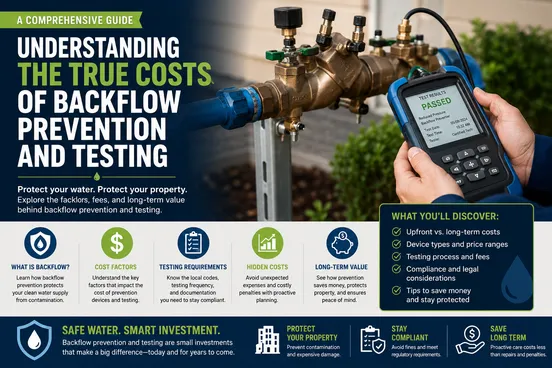
Understanding the Costs of Backflow Prevention and Testing: A Comprehensive Guide
Water safety is a fundamental concern for every property owner, whether residential or commercial. Among the most critical yet often overlooked aspects of maintaining a safe water supply is backflow prevention. This comprehensive guide explores the costs of backflow prevention and testing, helping property owners make informed decisions about protecting their water systems.
Backflow occurs when contaminated water flows backward into the clean water supply, potentially introducing harmful chemicals, bacteria, or other pollutants into drinking water. This dangerous situation can arise from various circumstances, including pressure changes in municipal water systems, equipment malfunctions, or improper plumbing installations. The consequences extend far beyond inconvenience – backflow incidents can lead to serious health risks, legal liabilities, and costly remediation efforts.
Understanding the financial investment required for proper backflow prevention and testing is essential for responsible property management. While initial costs may seem substantial, the expense of prevention pales in comparison to the potential costs of contamination incidents, including medical bills, legal fees, property damage, and regulatory fines. This guide will break down the various cost components, helping you budget effectively while ensuring compliance with local regulations and protecting the health and safety of building occupants and the broader community.
Introduction to Backflow Prevention
Backflow prevention represents a critical safeguard in modern plumbing systems, designed to protect potable water supplies from contamination. At its core, backflow prevention involves installing specialized devices and implementing systems that prevent the reverse flow of water, which could introduce contaminants, chemicals, or other hazardous materials into clean drinking water supplies.
The importance of backflow prevention systems cannot be overstated in today's complex plumbing infrastructure. These systems serve as the last line of defense against water contamination, particularly in commercial settings where cross-connections between potable and non-potable water systems are common. Industrial facilities, restaurants, medical facilities, and even residential properties with irrigation systems face significant risks without proper backflow prevention measures in place.
Backflow issues can dramatically impact health and safety across multiple levels. When contaminated water enters the potable water supply, it can spread waterborne diseases, chemical poisoning, and other serious health hazards throughout entire buildings or even municipal water systems. Historical incidents have demonstrated how quickly backflow situations can escalate, affecting hundreds or thousands of people within hours. The contamination can include anything from fertilizers and pesticides in irrigation systems to industrial chemicals, sewage, or medical waste in specialized facilities.
Property owners face substantial liability when backflow incidents occur on their premises. Beyond immediate health concerns, contamination events can result in extensive property damage, business interruptions, legal actions, and regulatory penalties. The financial implications often extend far beyond the initial incident, including long-term monitoring requirements, system remediation costs, and potential lawsuits from affected parties. Understanding these risks underscores why investing in proper backflow prevention and testing represents not just regulatory compliance, but sound financial planning and responsible property management for any serious property owner or manager.
Types of Backflow Prevention Devices
Understanding the various types of backflow prevention devices is essential when evaluating the costs of backflow prevention and testing. Each device type offers different levels of protection and comes with distinct installation, maintenance, and testing requirements that directly impact overall expenses.
Reduced Pressure Zone (RPZ) Assemblies represent the gold standard in backflow prevention technology. These sophisticated devices provide the highest level of protection against both backpressure and backsiphonage conditions. RPZ assemblies feature two independently acting check valves separated by a reduced pressure zone, with a relief valve that opens to atmosphere when the pressure differential falls below acceptable levels. While RPZ assemblies offer superior protection, they require professional installation, regular testing, and proper drainage systems to handle relief valve discharge. These devices are mandatory for high-hazard applications such as hospitals, chemical plants, and wastewater treatment facilities.
Double Check Valve Assemblies provide a more economical solution for moderate-risk applications. These devices incorporate two independently acting check valves in series, along with test cocks for field testing. Double check assemblies protect against backpressure and backsiphonage in situations where the potential contamination poses less severe health risks. Common applications include office buildings, retail spaces, and residential properties with irrigation systems. While less expensive than RPZ assemblies, double check valves still require annual testing and professional maintenance to ensure proper operation.
Pressure Vacuum Breakers (PVB) offer cost-effective protection specifically against backsiphonage conditions. These devices work by allowing air to enter the system when supply pressure drops, breaking the siphon effect that could draw contaminated water backward. PVBs are commonly used for irrigation systems and other applications where backpressure is not a concern. Installation requirements are less stringent than RPZ assemblies, but PVBs must be installed above the highest downstream outlet and cannot be subjected to backpressure conditions.
Air Gaps represent the simplest and most reliable form of backflow prevention, requiring no mechanical components. An air gap is simply a physical separation between the water supply outlet and the flood level rim of the receiving vessel. While air gaps provide absolute protection and require no testing or maintenance, they are not always practical due to space constraints and aesthetic considerations. When feasible, air gaps offer the most cost-effective long-term solution for backflow prevention, particularly in commercial kitchen applications and laboratory settings.
Cost Factors Influencing Backflow Prevention and Testing
The costs of backflow prevention and testing vary significantly based on numerous interconnected factors that property owners must carefully consider when budgeting for these essential safety systems. Understanding these variables helps ensure accurate cost projections and informed decision-making throughout the planning process.
State regulations and requirements form the foundation of backflow prevention cost structures, as compliance mandates directly influence device selection, installation specifications, and ongoing testing protocols. Different jurisdictions maintain varying standards for backflow prevention, with some requiring more stringent protection levels than others. States like California and Florida have particularly comprehensive backflow prevention programs, often resulting in higher initial costs but providing greater long-term protection. Local water utilities may impose additional requirements beyond state minimums, including specific device types, installation locations, or testing frequencies. These regulatory variations can significantly impact project costs, making it essential to consult with local authorities and qualified professionals before finalizing system designs.
Type of backflow prevention device represents perhaps the most significant cost variable in any backflow prevention project. RPZ assemblies typically cost two to three times more than double check valve assemblies, while requiring more complex installation procedures and ongoing maintenance. Device sizing also affects costs substantially, with larger assemblies requiring proportionally higher investments in equipment, installation labor, and testing services. The specific application determines device selection, with high-hazard facilities requiring more expensive protection levels than moderate-risk applications.
Installation and labor costs encompass a broad range of factors including site accessibility, existing plumbing configurations, and local labor rates. Complex installations requiring extensive excavation, concrete work, or specialized equipment can double or triple basic installation costs. Urban areas typically command higher labor rates than rural locations, while emergency or expedited installations carry significant premium charges. The need for permits, inspections, and utility coordination adds administrative costs that vary by location and project complexity.
Testing and maintenance fees represent ongoing operational expenses that accumulate over the system's lifespan. Annual testing requirements mandate certified technician services, with costs varying based on device complexity and local service provider rates. Routine maintenance includes component replacements, calibration adjustments, and preventive repairs that help avoid costly emergency plumbing situations. Geographic location affects service availability and pricing, with remote areas often facing higher per-visit charges due to travel requirements.
Potential need for repairs or replacements introduces variable costs that depend on system quality, environmental conditions, and maintenance practices. Harsh water conditions, temperature extremes, and inadequate maintenance can accelerate component wear, leading to premature replacement needs. Planning for periodic major maintenance and eventual system replacement helps property owners budget appropriately for long-term backflow prevention costs while maintaining continuous protection and regulatory compliance.
Average Costs of Backflow Prevention Systems
Understanding the financial investment required for backflow prevention systems helps property owners budget effectively while ensuring compliance with water safety regulations. The costs of backflow prevention and testing encompass both initial capital expenditures and ongoing operational expenses that vary significantly based on system complexity and application requirements.
Initial installation costs for backflow prevention systems range from moderate investments for basic residential applications to substantial expenditures for complex commercial installations. Pressure Vacuum Breakers typically represent the most economical option, with complete installations ranging from $300 to $800 for standard residential applications. These costs include basic device procurement, standard installation labor, and initial testing certification. Double Check Valve Assemblies require higher initial investments, typically ranging from $800 to $2,500 for complete installations, depending on device size and site complexity. The increased cost reflects more sophisticated equipment and additional installation requirements compared to simpler devices.
Reduced Pressure Zone Assemblies command the highest initial investment, with complete installations typically ranging from $1,500 to $5,000 or more for standard applications. Large commercial installations or complex site conditions can drive costs significantly higher, sometimes exceeding $10,000 for specialized applications requiring extensive site preparation, custom enclosures, or multiple device installations. These premium costs reflect the sophisticated engineering, precision manufacturing, and complex installation requirements associated with the highest level of backflow protection.
Long-term testing and maintenance costs represent ongoing operational expenses that accumulate throughout the system's operational lifespan. Annual testing requirements typically cost between $75 and $200 per device, depending on device complexity and local service provider rates. RPZ assemblies generally require more extensive testing procedures, resulting in higher annual testing costs compared to simpler devices. Geographic location significantly affects testing costs, with urban areas offering more competitive pricing due to higher service provider density and reduced travel requirements.
Routine maintenance expenses include component replacements, calibration adjustments, and preventive repairs that help ensure reliable operation and extend system lifespan. Annual maintenance costs typically range from $100 to $400 per device, with older systems and harsh operating conditions requiring more frequent attention. Major component replacements may be necessary every 10 to 15 years, with costs ranging from 50% to 75% of original installation expenses.
Comparative costs by device type reveal significant differences in both initial and ongoing expenses. While PVBs offer the lowest initial costs, their limited application range restricts their use to specific situations. Double check assemblies provide moderate initial costs with reasonable ongoing expenses, making them suitable for many commercial applications. RPZ assemblies require the highest investment but provide superior protection for high-risk applications where contamination consequences could be severe.
Legal Requirements for Backflow Prevention
Understanding legal requirements for backflow prevention is crucial for property owners, as non-compliance can result in significant financial penalties, legal liabilities, and operational disruptions. These requirements directly impact the costs of backflow prevention and testing by establishing minimum standards for device selection, installation, and ongoing maintenance protocols.
Local building codes and regulations establish the fundamental framework for backflow prevention requirements, varying significantly across different jurisdictions and property types. Most municipalities adopt either the Uniform Plumbing Code (UPC) or International Plumbing Code (IPC) as their baseline, then modify these standards to address local conditions and concerns. Commercial properties typically face more stringent requirements than residential applications, with specific mandates for restaurants, medical facilities, industrial operations, and other high-risk uses. Many jurisdictions require backflow prevention devices for any property with irrigation systems, fire suppression systems, or potential cross-connections between potable and non-potable water supplies.
Water utility companies often impose additional requirements beyond basic building codes, including specific device types, installation locations, and approved contractor lists. These utility requirements may mandate RPZ assemblies for applications where building codes might permit less expensive alternatives, significantly impacting project costs. Some utilities maintain approved device lists, limiting equipment options and potentially affecting competitive pricing. Property owners must coordinate with both building departments and water utilities to ensure full compliance with all applicable requirements.
Frequency of testing mandates represents a critical ongoing compliance requirement that directly affects operational costs throughout the system's lifespan. Most jurisdictions require annual testing of all backflow prevention devices, with some high-risk applications requiring more frequent testing intervals. Testing must be performed by certified technicians using calibrated equipment, with results reported to appropriate authorities within specified timeframes. Failure to complete required testing can result in water service disconnection, making compliance essential for continued operations.
Some jurisdictions require additional testing after any repairs, modifications, or suspected contamination events. New installations typically require initial testing and certification before final approval, adding to project completion timelines and costs. Testing documentation must be maintained for specified periods, often three to five years, requiring administrative systems to ensure compliance with record-keeping requirements.
Consequences of non-compliance can be severe and costly, extending far beyond simple regulatory penalties. Water service disconnection represents the most immediate consequence, potentially shutting down business operations until compliance is achieved. Reconnection often requires emergency service calls, expedited testing, and utility administrative fees that can total thousands of dollars. Legal liabilities increase substantially when non-compliant properties experience contamination incidents, with property owners facing potential lawsuits, insurance claims, and regulatory enforcement actions.
Regulatory penalties vary by jurisdiction but can include daily fines until compliance is achieved, with some areas imposing penalties exceeding $1,000 per day for continued violations. Insurance coverage may be voided for properties that fail to maintain required backflow prevention systems, leaving property owners fully exposed to contamination-related claims and damages.
How to Choose a Qualified Backflow Testing Service
Selecting the right backflow testing service provider is essential for ensuring reliable protection, regulatory compliance, and cost-effective maintenance of backflow prevention systems. The quality of testing services directly impacts system reliability and can significantly influence long-term costs of backflow prevention and testing through proper maintenance and early problem detection.
Factors to consider in selection begin with proper licensing and certification requirements that vary by state and local jurisdiction. Qualified technicians must hold current backflow testing certifications from recognized programs such as the American Society of Sanitary Engineering (ASSE) or American Backflow Prevention Association (ABPA). These certifications require comprehensive training, examination, and ongoing education to maintain current status. Additionally, service providers should maintain appropriate business licenses, insurance coverage, and bonding to protect customers against potential liabilities or service failures.
Experience and reputation within the local market provide valuable indicators of service quality and reliability. Established service providers typically have developed efficient testing procedures, maintain relationships with equipment suppliers, and understand local regulatory requirements thoroughly. Customer references from similar property types offer insights into service quality, reliability, and pricing practices. Professional associations and industry memberships demonstrate commitment to best practices and ongoing education within the backflow prevention field.
Equipment quality and calibration practices directly affect testing accuracy and regulatory compliance. Reputable service providers invest in high-quality testing equipment and maintain rigorous calibration schedules to ensure accurate results. Testing equipment should be calibrated annually by certified laboratories, with documentation available for review. Some jurisdictions require specific equipment types or calibration standards, making it important to verify compliance with local requirements.
Questions to ask potential service providers should focus on qualifications, procedures, and service reliability. Inquire about technician certifications, insurance coverage, and experience with similar properties or applications. Ask about testing procedures, equipment calibration practices, and documentation provided after testing completion. Understanding response times for routine and emergency plumbing services helps evaluate service reliability and availability when needed.
Pricing structures and payment terms vary significantly among service providers, making it important to understand all costs involved in testing services. Some providers offer package deals for multiple devices or multi-year contracts that can reduce overall costs. Emergency service availability and associated costs should be clearly understood, as urgent repairs or testing needs can arise unexpectedly.
Importance of reputation and licensing cannot be overstated when selecting backflow testing services, as inadequate testing can result in regulatory violations, safety risks, and costly remediation requirements. Licensed technicians understand proper testing procedures, documentation requirements, and regulatory compliance standards essential for maintaining system reliability. Reputable service providers maintain comprehensive insurance coverage, protecting customers against potential damages or service failures.
Professional service providers also stay current with changing regulations, new equipment technologies, and industry best practices through continuing education and professional development. This knowledge helps ensure testing services remain compliant with evolving requirements and take advantage of improved technologies or procedures that can enhance system reliability or reduce long-term costs.
Conclusion and Next Steps
Understanding the costs of backflow prevention and testing represents a critical investment in water safety, regulatory compliance, and long-term property protection. Throughout this comprehensive guide, we have explored the various factors that influence these costs, from initial device selection and installation through ongoing testing and maintenance requirements. The financial commitment extends beyond simple equipment purchases to encompass professional installation, regular testing, routine maintenance, and eventual system replacement over the operational lifespan.
The importance of investing in proper backflow prevention cannot be overstated, particularly given the severe consequences of contamination incidents and regulatory non-compliance. While initial costs may seem substantial, they pale in comparison to the potential expenses associated with waterborne illness outbreaks, legal liabilities, property damage, and regulatory penalties. Professional installation and ongoing maintenance by qualified technicians ensure reliable operation and regulatory compliance while maximizing system lifespan and performance.
Property owners should view backflow prevention as an essential component of comprehensive property management and risk mitigation strategies. Regular testing and maintenance not only ensure regulatory compliance but also provide early detection of potential problems before they become costly emergency situations. Working with qualified professionals throughout the process ensures optimal system design, proper installation, and reliable ongoing service that protects both property investments and public health.
Don't compromise on water safety and regulatory compliance. Contact TK PLUMBING today at (941) 392-3846 or visit tkplumbing941.com to schedule your professional backflow testing and learn more about our comprehensive commercial plumbing services. Our certified technicians provide reliable testing, maintenance, and installation services to keep your backflow prevention systems operating safely and efficiently. Protect your property and ensure compliance with professional backflow prevention services you can trust.