
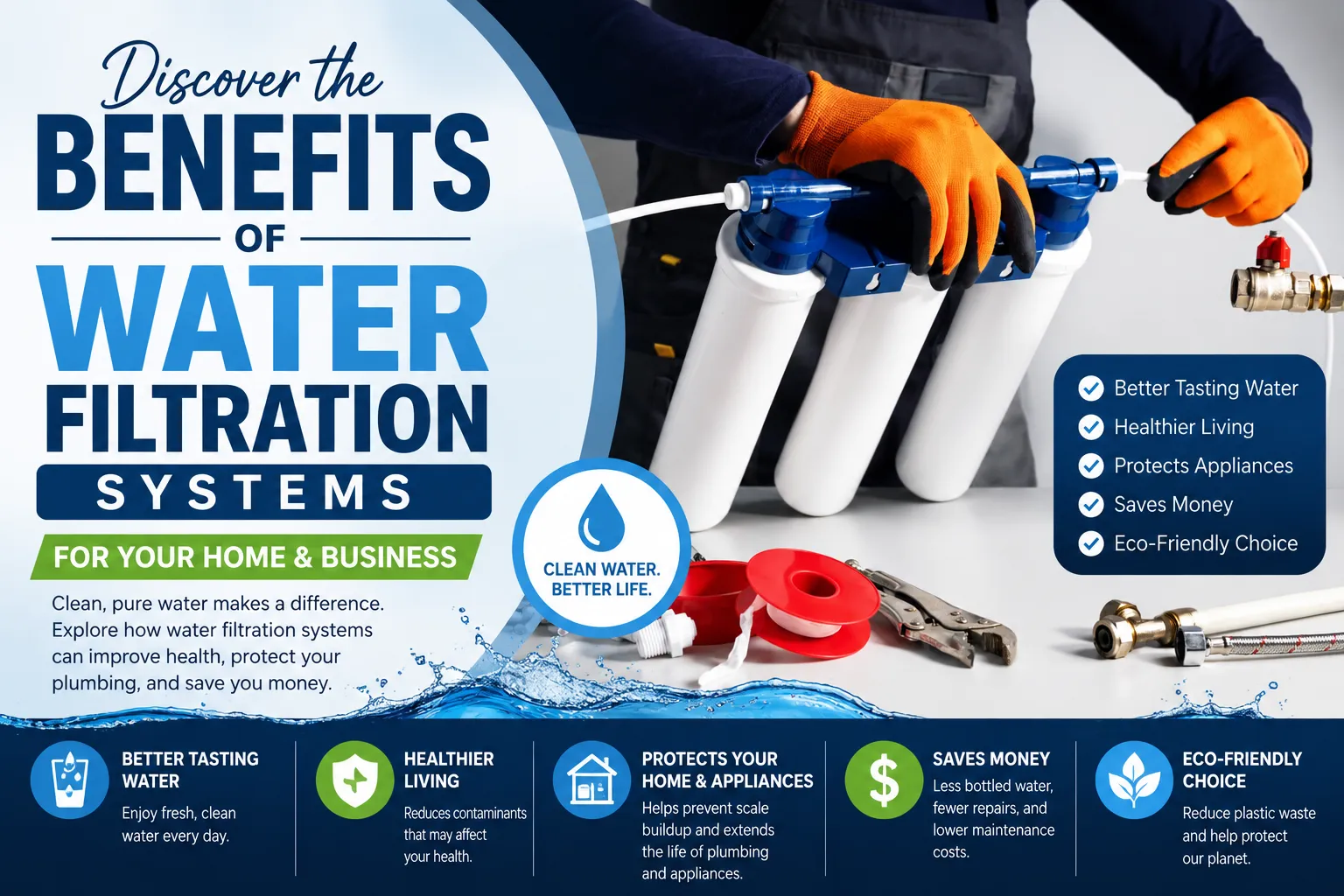
Discover the Benefits of Water Filtration Systems for Your Home and Business
Water is essential to life, yet the quality of water flowing through our taps isn't always guaranteed to meet the highest standards. Whether you're a homeowner concerned about your family's health, a property manager responsible for multiple units, or a business owner ensuring customer satisfaction, understanding the benefits of water filtration systems is crucial for making informed decisions about your water quality.
In today's world, municipal water treatment facilities work diligently to provide safe drinking water, but contaminants can still find their way into your water supply through aging infrastructure, environmental factors, or source water contamination. From chlorine and fluoride to heavy metals, bacteria, and sediment, these unwanted substances can affect not only the taste and odor of your water but also your health and the longevity of your plumbing systems.
Water filtration systems serve as your final line of defense, providing an additional layer of protection that ensures every drop of water in your home or business meets the highest quality standards. These sophisticated systems work around the clock to remove contaminants, improve taste, and protect your investment in plumbing infrastructure. Whether you're considering a simple point-of-use filter for your kitchen sink or a comprehensive whole-house system, understanding how these technologies work and their numerous advantages will help you make the best choice for your specific needs and budget.
Introduction to Water Filtration Systems
Water filtration systems are sophisticated devices designed to remove impurities, contaminants, and unwanted substances from your water supply, ensuring that every drop flowing from your taps is clean, safe, and pleasant to consume. These systems utilize various technologies and methods to target specific contaminants, ranging from basic sediment and chlorine removal to advanced purification that eliminates bacteria, viruses, and heavy metals.
The importance of clean water cannot be overstated in both residential and commercial settings. For homeowners, access to pure water directly impacts family health, cooking quality, and overall quality of life. In commercial environments, water quality affects everything from customer satisfaction in restaurants to operational efficiency in manufacturing facilities. Poor water quality can lead to health concerns, equipment damage, increased maintenance costs, and even regulatory compliance issues for businesses.
Water filtration systems operate through multiple mechanisms depending on their design and intended purpose. Physical filtration removes particles through barriers like screens or porous materials, while chemical filtration uses substances like activated carbon to absorb contaminants. Biological filtration employs beneficial microorganisms to break down harmful substances, and advanced systems may combine multiple approaches for comprehensive purification.
The filtration process typically begins when water enters the system and passes through various stages of treatment. Each stage targets specific types of contaminants, ensuring thorough purification before the water reaches your faucet. Modern systems are engineered to maintain consistent water pressure while effectively removing impurities, making them practical solutions for everyday use in homes and businesses alike.
Types of Water Filtration Systems
Understanding the different types of water filtration systems available helps you make an informed decision based on your specific water quality needs and usage requirements. Each system type offers unique advantages and is designed to address particular contaminants and situations.
Activated Carbon Filters
Activated carbon filters represent one of the most popular and versatile filtration technologies available today. These systems use specially treated carbon that has been processed to create millions of tiny pores, dramatically increasing its surface area and absorption capacity. The activated carbon effectively removes chlorine, volatile organic compounds (VOCs), pesticides, and many chemicals that affect taste and odor.
These filters excel at improving the aesthetic qualities of water, making it taste and smell better while removing many harmful organic compounds. They're particularly effective in urban areas where chlorine treatment is common, and they work well for both home water filtration and commercial applications. However, activated carbon filters have limitations when it comes to removing dissolved minerals, salts, and certain bacteria or viruses.
Reverse Osmosis Systems
Reverse osmosis (RO) systems provide some of the most comprehensive water purification available for residential and commercial use. These systems force water through an extremely fine semi-permeable membrane that blocks contaminants while allowing pure water molecules to pass through. RO systems effectively remove dissolved solids, heavy metals, fluoride, nitrates, and many bacteria and viruses.
The reverse osmosis process typically involves multiple stages, including pre-filtration to remove larger particles, the RO membrane stage, and often post-filtration for final polishing. These systems are particularly valuable in areas with hard water or known contamination issues, though they do require more maintenance and produce some wastewater during the filtration process.
Ultraviolet Purification
Ultraviolet (UV) purification systems use powerful UV light to destroy bacteria, viruses, and other microorganisms without adding chemicals to your water. This technology is especially valuable for well water or situations where biological contamination is a concern. UV systems are environmentally friendly, require minimal maintenance, and don't alter the taste or chemical composition of water.
These systems work by exposing water to UV light at a specific wavelength that damages the DNA of microorganisms, rendering them unable to reproduce or cause illness. UV purification is often combined with other filtration methods to provide comprehensive protection against both chemical and biological contaminants.
Whole House Filtration vs. Point-of-Use Systems
The choice between whole house filtration and point-of-use systems depends on your specific needs, budget, and water quality concerns. Whole house systems treat all water entering your property, protecting appliances, plumbing, and providing filtered water at every tap. These systems are ideal for addressing widespread contamination issues or protecting expensive appliances from hard water damage.
Point-of-use systems, such as under-sink filters or countertop units, provide targeted treatment at specific locations where you need the highest quality water, typically for drinking and cooking. These systems are more affordable initially and easier to maintain, making them popular choices for renters or those with limited budgets. Commercial water filters often combine both approaches, using whole-building systems for general treatment and specialized point-of-use systems for critical applications.
Benefits of Water Filtration Systems
The benefits of water filtration systems extend far beyond simply providing clean drinking water, encompassing health, financial, environmental, and practical advantages that make them valuable investments for homes and businesses alike.
Improved Water Quality
Water filtration systems dramatically enhance the overall quality of your water by removing a wide range of contaminants that can affect taste, odor, appearance, and safety. Municipal water treatment plants do excellent work in providing safe water, but they cannot eliminate every possible contaminant, and distribution systems can introduce additional impurities. Filtration systems provide that crucial final step in ensuring optimal water quality.
These systems effectively remove chlorine, which is commonly used in municipal treatment but can create an unpleasant taste and odor. They also eliminate sediment, rust particles from aging pipes, and organic compounds that may have entered the water supply through agricultural runoff or industrial activities. The result is crystal-clear water that tastes fresh and clean, encouraging increased water consumption and improving the quality of beverages and food prepared with filtered water.
Health Benefits
The health advantages of filtered water are significant and well-documented. By removing harmful contaminants such as heavy metals, pesticides, bacteria, and chemical pollutants, water filtration systems reduce exposure to substances that can cause both immediate health concerns and long-term health issues. Lead, for example, can cause serious neurological problems, particularly in children, while other heavy metals like mercury and cadmium can accumulate in the body over time.
Filtration systems also remove chlorine byproducts, which have been linked to certain health concerns with long-term exposure. For individuals with compromised immune systems, pregnant women, or families with young children, filtered water provides an extra layer of protection against waterborne illnesses and contaminants. The improved taste of filtered water often encourages people to drink more water overall, supporting better hydration and general health.
Cost Effectiveness
While the initial investment in water filtration systems may seem substantial, the long-term cost savings are considerable when compared to purchasing bottled water. A family spending $20-30 per week on bottled water can save thousands of dollars annually by switching to a home water filtration system. For businesses, particularly restaurants and offices, the savings can be even more dramatic.
Beyond the direct cost comparison with bottled water, filtration systems help protect expensive appliances and plumbing systems from damage caused by hard water minerals and corrosive contaminants. Coffee makers, dishwashers, water heaters, and other water-using appliances last longer and operate more efficiently when supplied with filtered water, reducing replacement and repair costs over time.
Environmental Impact
The environmental benefits of water filters are substantial and increasingly important as businesses and homeowners seek to reduce their ecological footprint. A single household using a water filtration system can eliminate the need for thousands of plastic water bottles annually, significantly reducing plastic waste that often ends up in landfills or oceans.
Manufacturing, transporting, and disposing of bottled water requires enormous amounts of energy and resources. By choosing filtration systems, you're reducing demand for these environmentally costly processes while still enjoying high-quality water. Many businesses are discovering that offering filtered water to employees and customers demonstrates environmental responsibility while reducing operational costs.
Increased Lifespan of Plumbing and Appliances
Water filtration systems, particularly whole-house systems, provide significant protection for plumbing infrastructure and water-using appliances. Hard water minerals, sediment, and corrosive chemicals can cause premature wear and failure in pipes, fixtures, and appliances. Scale buildup from hard water reduces efficiency in water heaters and can completely block pipes over time.
By removing these harmful substances before they enter your plumbing system, filtration systems help maintain optimal water flow, prevent costly repairs, and extend the operational life of expensive equipment. This protection is particularly valuable in commercial settings where equipment downtime can result in significant business losses. The benefits of filtration systems in terms of equipment protection often justify the investment costs within just a few years through reduced maintenance and replacement expenses.
For property managers and business owners, this protection translates to lower maintenance costs, fewer emergency repairs, and improved tenant or customer satisfaction. The consistent delivery of high-quality water becomes a competitive advantage while reducing operational headaches and unexpected expenses.
How to Choose the Right Water Filtration System
Selecting the appropriate water filtration system requires careful consideration of your specific water quality issues, usage patterns, and budget constraints. The right system for your home or business depends on multiple factors that should be evaluated systematically to ensure optimal performance and value.
Assessing Water Quality
The first step in choosing a water filtration system involves understanding exactly what contaminants are present in your water supply. Professional water testing is essential for making informed decisions about filtration needs. Basic test kits can identify common issues like chlorine, hardness, pH levels, and total dissolved solids, while comprehensive laboratory testing can detect heavy metals, bacteria, pesticides, and other specific contaminants.
Municipal water suppliers are required to provide annual water quality reports, which offer valuable baseline information about your water source. However, conditions can change, and contamination can occur in distribution systems, making independent testing advisable. Well water users particularly need thorough testing since private wells aren't subject to the same regulatory oversight as municipal supplies.
Different contaminants require different filtration approaches, so understanding your water's specific issues helps determine whether you need basic carbon filtration, comprehensive reverse osmosis, UV sterilization, or a combination of technologies. Testing should be performed by certified laboratories to ensure accurate results that can guide your system selection process.
Understanding Your Needs
Beyond water quality issues, consider your household or business water usage patterns, space constraints, and maintenance preferences. Large families or businesses with high water consumption may benefit from whole-house systems or commercial water filters with higher capacity and flow rates. Smaller households might find point-of-use systems more economical and practical.
Consider your specific priorities: if drinking water quality is your primary concern, a high-quality under-sink reverse osmosis system might be ideal. If you're dealing with hard water that's damaging appliances and creating scale buildup, a whole-house water softening system combined with filtration might be the better choice. Businesses need to consider peak usage times, space for equipment installation, and ongoing operational requirements.
Budget considerations should include both initial costs and ongoing expenses like filter replacements, maintenance, and energy consumption. While more comprehensive systems cost more upfront, they often provide better long-term value through superior performance and lower per-gallon filtration costs.
Professional Installation vs. DIY Options
While some simple point-of-use filters can be installed by homeowners, most comprehensive water filtration systems benefit significantly from professional installation. Professional installation ensures optimal performance, maintains warranty coverage, and prevents costly mistakes that can lead to water damage or system failure.
Whole-house systems, reverse osmosis units, and commercial installations typically require plumbing modifications, electrical connections, and precise system configuration that demands professional expertise. Certified plumbers understand local building codes, can properly size systems for your needs, and ensure installations meet safety and performance standards.
Professional installation also includes system commissioning, where technicians test and adjust the system for optimal performance, explain maintenance requirements, and provide ongoing support. This professional relationship becomes valuable for routine maintenance, troubleshooting, and system upgrades as your needs evolve over time.
Installation and Maintenance of Water Filtration Systems
Importance of Professional Installation
Professional installation by certified plumbers ensures your water filtration system operates at peak efficiency while protecting your property from potential water damage. Experienced installers understand the complexities of integrating filtration systems with existing plumbing, electrical requirements for powered systems, and local building codes that may affect installation procedures.
Professional installers properly size and configure systems for your specific needs, ensuring adequate water pressure, appropriate flow rates, and optimal contaminant removal. They also provide valuable guidance on system operation, maintenance schedules, and troubleshooting common issues. This expertise prevents costly mistakes and ensures your investment provides maximum benefits from day one.
Routine Maintenance Tips
Regular maintenance is essential for maintaining water quality and system longevity. Most systems require periodic filter replacement, with schedules varying based on water quality, usage levels, and filter types. Carbon filters typically need replacement every 3-6 months, while reverse osmosis membranes may last 2-3 years with proper care.
Keep detailed maintenance records, including filter replacement dates, water quality test results, and any system adjustments. Monitor water flow rates, taste, and odor changes that might indicate maintenance needs. Many modern systems include indicator lights or alarms that signal when maintenance is required, making it easier to stay on schedule.
Signs You Need Service
Watch for decreased water pressure, changes in water taste or odor, unusual noises from the system, or visible leaks around system components. These symptoms often indicate filter saturation, system malfunctions, or maintenance needs that require professional attention. Addressing issues promptly prevents more serious problems and maintains optimal water quality throughout your home or business.
Common Myths about Water Filtration Systems
Several misconceptions about water filtration systems can prevent people from making informed decisions about water quality improvement. Understanding the facts behind these myths helps clarify the real benefits of filtration systems.
Misconceptions about Cost
Many people believe water filtration systems are prohibitively expensive, but this perception often stems from comparing initial costs without considering long-term savings. While quality systems require upfront investment, they typically pay for themselves within 1-2 years through bottled water savings alone. When factoring in appliance protection and reduced plumbing maintenance, the financial benefits become even more compelling.
The cost per gallon of filtered water is typically just pennies compared to bottled water costs of $1-3 per gallon. For businesses, employee productivity benefits and customer satisfaction improvements often justify filtration system costs beyond simple water expenses. Additionally, financing options and various system sizes make filtration accessible for virtually any budget.
Concerns about Water Pressure
Another common myth suggests that filtration systems significantly reduce water pressure, making them impractical for daily use. Modern filtration systems are engineered to maintain adequate pressure for normal household and business activities. Properly sized and installed systems typically cause minimal pressure reduction that's barely noticeable during regular use.
When pressure issues do occur, they're usually related to improper sizing, overdue filter replacements, or installation problems rather than inherent system limitations. Professional installation and regular maintenance prevent most pressure-related concerns while ensuring optimal system performance.
Beliefs about Taste and Odor
Some people worry that filtration systems will make water taste "flat" or unnatural by removing beneficial minerals. While reverse osmosis systems do remove minerals, many people prefer the clean, neutral taste of filtered water. Additionally, many systems include remineralization stages that restore beneficial minerals while maintaining purity.
The reality is that most people find filtered water more pleasant to drink than unfiltered alternatives, leading to increased water consumption and better hydration. The removal of chlorine, sediment, and other contaminants typically results in water that tastes fresher and more appealing than municipal water straight from the tap.
Conclusion
The benefits of water filtration systems extend far beyond simple water purification, offering comprehensive solutions for health protection, cost savings, environmental responsibility, and infrastructure preservation. Whether you're a homeowner seeking to protect your family's health, a property manager responsible for multiple units, or a business owner focused on operational efficiency and customer satisfaction, water filtration systems provide measurable value that justifies their investment.
From removing harmful contaminants and improving taste to protecting expensive appliances and reducing environmental impact, these systems deliver multiple benefits that compound over time. The choice between different filtration technologies allows you to customize solutions for your specific needs, whether that's basic carbon filtration for taste improvement or comprehensive reverse osmosis for maximum purification.
Professional installation and regular maintenance ensure optimal performance and longevity, while the long-term cost savings make filtration systems financially attractive compared to bottled water alternatives. As water quality concerns continue to grow and environmental awareness increases, filtration systems represent smart investments in health, sustainability, and operational efficiency.
The technology continues to advance, offering more efficient, user-friendly, and cost-effective solutions for every application. By understanding your water quality needs and working with qualified professionals, you can select and maintain a filtration system that provides years of reliable service and peace of mind.
Ready to discover how water filtration can benefit your home or business? Contact TK Plumbing at (941) 392-3846 for a professional water quality assessment and personalized filtration system recommendations. Our experienced team will help you choose the perfect solution for your needs and ensure professional installation for optimal performance. Visit https://tkplumbing941.com/ to learn more about our comprehensive plumbing services and start enjoying the benefits of clean, filtered water today.