
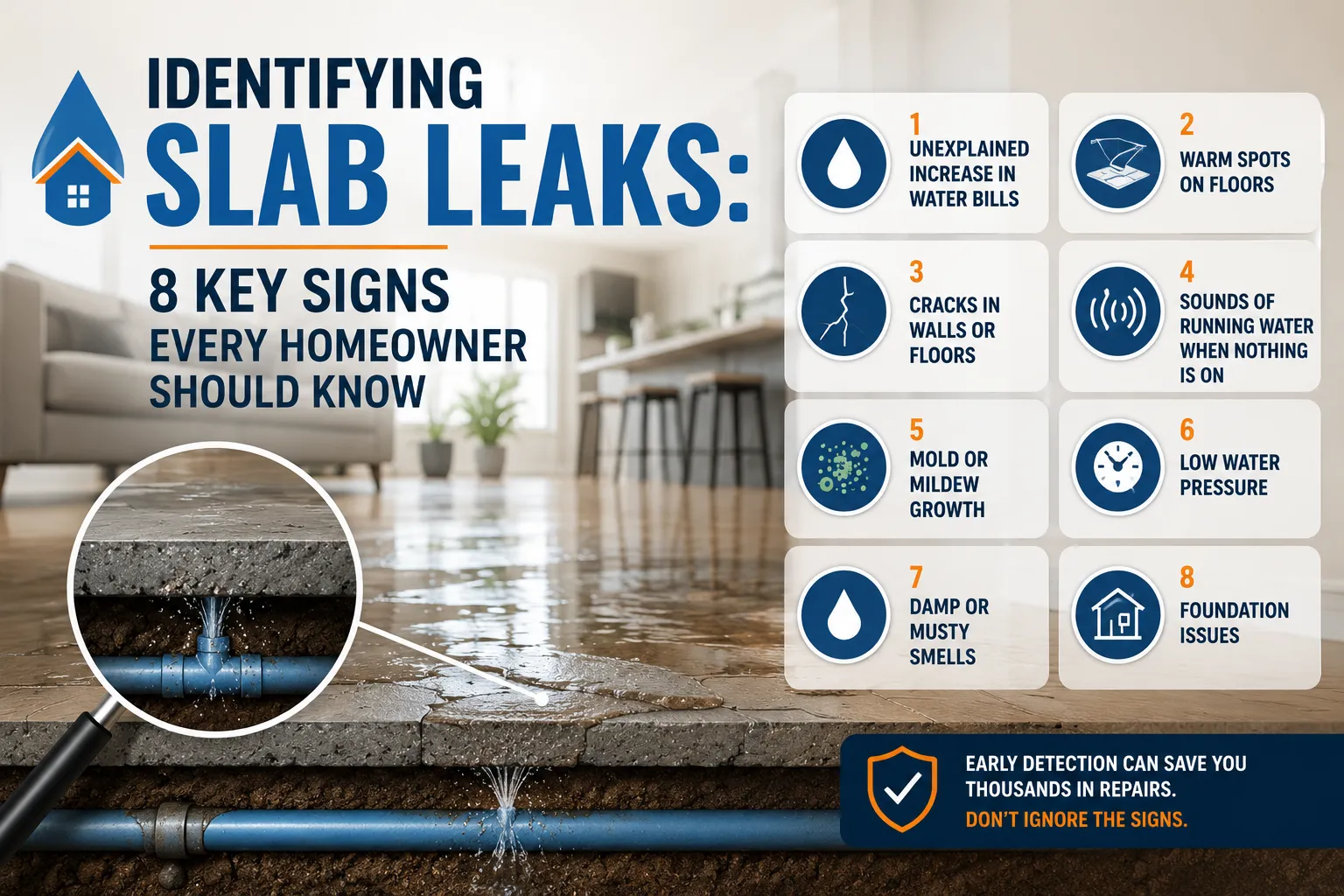
Identifying Slab Leaks: 8 Key Signs Every Homeowner Should Know
Introduction
Hidden beneath your home's foundation lies a network of water and sewer lines that keep your property functioning smoothly. When these pipes develop leaks within or beneath the concrete slab foundation, they create what plumbing professionals call "slab leaks." These underground water intrusions can cause devastating damage to your property if left undetected, making early identification crucial for every homeowner and property manager.
Slab leaks occur when water or sewer pipes running through or under your concrete foundation develop cracks, holes, or joint failures. Unlike visible plumbing issues, these leaks remain hidden from view, silently causing damage to your foundation, flooring, and overall structural integrity. The signs of a slab leak can be subtle initially, but they progressively worsen over time, leading to costly repairs and potential health hazards.
Understanding how to recognize the early warning signs of plumbing issues beneath your foundation can save thousands of dollars in repair costs and prevent extensive property damage. From unexplained increases in water bills to mysterious wet spots on your floors, these indicators serve as your first line of defense against major plumbing disasters. This comprehensive guide will equip you with the knowledge to identify potential slab leak symptoms before they escalate into expensive emergencies.
What Causes Slab Leaks?
Understanding the root causes of foundation water leaks helps property owners take preventive measures and recognize potential risk factors. Several factors contribute to the development of these underground plumbing problems, ranging from natural environmental conditions to construction-related issues.
Natural settling of the foundation represents one of the most common causes of slab leaks. As soil conditions change due to moisture fluctuations, drought, or seasonal weather patterns, your home's foundation gradually shifts and settles. This movement places stress on rigid pipes, causing them to crack or separate at joints. Clay soil, particularly common in many regions, expands and contracts significantly with moisture changes, creating additional pressure on underground plumbing systems.
Corrosion of pipes poses another significant threat, especially in homes built with copper or galvanized steel piping. Over time, chemical reactions between the pipe material and surrounding soil or water can cause deterioration. Acidic soil conditions, high mineral content in water, and electrolysis from nearby electrical systems accelerate this corrosion process. Older homes face higher risks due to aging pipe materials that have reached or exceeded their expected lifespan.
Poor construction practices during initial installation create long-term vulnerabilities in underground plumbing systems. Inadequate pipe support, improper joint connections, or using substandard materials can lead to premature failures. Additionally, construction crews sometimes damage existing pipes during excavation or concrete pouring, creating weak points that develop into leaks years later.
Extreme temperature changes stress underground pipes through expansion and contraction cycles. While concrete provides some insulation, significant temperature fluctuations can still affect pipes, particularly those closer to the surface. Freeze-thaw cycles in colder climates pose particular risks, as water expansion within pipes can cause catastrophic ruptures.
8 Signs of a Slab Leak
Recognizing the signs of a slab leak early can prevent extensive damage and costly repairs. These eight key indicators serve as warning signals that require immediate attention from property owners and managers.
1. Wet Spots on FloorsUnexplained wet areas on your flooring, particularly on concrete or tile surfaces, often indicate water seeping up from below. These spots may appear randomly and persist despite cleaning efforts. The moisture typically feels cool to the touch and may leave mineral deposits or discoloration. In carpeted areas, wet spots might feel squishy underfoot or create a musty odor. Property managers should pay special attention to wet spots that appear in multiple units or common areas, as these patterns often indicate main line issues.
2. Unexplained Increase in Water BillA sudden spike in water usage without corresponding changes in consumption patterns signals potential hidden leaks. Even small slab leaks can waste hundreds of gallons monthly, creating noticeable billing increases. Compare current bills to previous months and seasons, accounting for normal usage variations. Commercial property owners should monitor water usage across multiple units to identify unusual patterns that might indicate foundation water leaks affecting entire buildings.
3. Mildew and Mold PresencePersistent moisture from underground leaks creates ideal conditions for mold and mildew growth. These fungi often appear in unexpected locations, such as along baseboards, in corners, or on lower portions of walls. The distinctive musty smell associated with mold growth may be your first indication of hidden moisture problems. Health-conscious property managers must address mold issues immediately, as they pose serious risks to tenant health and can lead to liability concerns.
4. Cracks in Flooring or WallsFoundation movement caused by water infiltration creates visible cracks in various surfaces. Floor tiles may crack or become loose, hardwood floors might warp or buckle, and walls may develop hairline fractures. These cracks often appear gradually and worsen over time as the underlying moisture problem persists. Pay attention to crack patterns, as multiple cracks in proximity often indicate localized foundation issues related to plumbing leaks.
5. Sound of Running WaterHearing water movement when all fixtures are turned off indicates active leaks within your plumbing system. This sound might be subtle, resembling a gentle whooshing or trickling noise coming from floors or walls. The sound may be more noticeable during quiet periods, such as late at night or early morning. Use a stethoscope or place your ear against the floor in suspected areas to better locate the source of these sounds.
6. Damp or Bulging CarpetsCarpeted areas above slab leaks often develop dampness, discoloration, or bulging sections. The carpet padding may feel soggy when pressed, and you might notice a persistent wet smell despite regular cleaning. Carpet edges may begin lifting or curling as moisture affects the adhesive. In commercial settings, high-traffic carpeted areas showing these symptoms require immediate investigation to prevent slip hazards and maintain professional appearances.
7. Water Meter MovementYour water meter provides definitive evidence of active leaks when all water sources are shut off. Turn off all faucets, appliances, and irrigation systems, then observe the meter for movement. Any rotation or digital changes indicate water flowing through your system, suggesting hidden leaks. This simple test helps distinguish between various types of plumbing issues and confirms suspected slab leak symptoms.
8. Warm Spots on FloorsHot water line leaks create noticeably warm areas on floors, even when heating systems aren't operating. These spots feel consistently warmer than surrounding areas and may be accompanied by increased humidity. The warmth persists regardless of room temperature or seasonal changes. Restaurant and commercial kitchen managers should be particularly vigilant about warm floor spots, as they often indicate hot water supply line issues that can affect business operations.
How to Diagnose a Slab Leak
Proper diagnosis of suspected slab leaks requires a systematic approach combining basic homeowner assessments with professional leak detection and repair services. Understanding both DIY methods and professional procedures helps property owners make informed decisions about when to seek expert assistance.
DIY Detection MethodsBegin your investigation by conducting a comprehensive water meter test during a period when no water usage occurs. Document the meter reading, ensure all water sources remain off for several hours, then recheck for changes. Even small movements indicate active leaks requiring further investigation. Walk through your property systematically, checking for visual signs of moisture, listening for unusual sounds, and feeling for temperature variations in flooring.
Create a simple floor map marking any suspicious areas, noting details like wet spots, warm areas, or unusual sounds. Take photographs of visible damage, including cracks, discoloration, or mold growth. This documentation proves valuable when consulting with professional plumbers and may assist with insurance claims. Monitor these areas over several days to track changes or worsening conditions.
Professional Assessment ProceduresProfessional plumbing leak detection utilizes specialized equipment unavailable to most property owners. Electronic leak detection devices can pinpoint exact leak locations without destructive excavation. These tools include ground microphones that amplify underground water sounds, thermal imaging cameras that detect temperature variations, and pressure testing equipment that isolates specific pipe sections.
Experienced plumbers employ systematic testing procedures, starting with visual inspections and progressing to electronic detection methods. They may use tracer gases or dyes to track water movement through your plumbing system. Professional assessment also includes evaluation of pipe materials, age, and overall system condition to identify potential future problem areas.
Importance of Professional ExpertiseWhile basic detection methods help identify potential problems, accurate diagnosis requires trained professionals with specialized knowledge and equipment. Attempting complex leak detection without proper tools often leads to misdiagnosis, unnecessary excavation, or missed problems that continue causing damage. Professional plumbers understand local soil conditions, common pipe materials, and regional factors affecting underground plumbing systems, ensuring accurate problem identification and appropriate repair recommendations.
The Impact of Slab Leaks
The consequences of unaddressed slab leaks extend far beyond simple plumbing repairs, affecting structural integrity, property values, and occupant health. Understanding these potential impacts emphasizes the importance of prompt detection and repair when signs of plumbing issues emerge.
Property Damage ConsequencesFoundation damage represents the most serious structural threat from slab leaks. Continuous water infiltration weakens concrete, causes soil erosion beneath foundations, and creates uneven settling that affects entire buildings. This damage manifests as cracked walls, uneven floors, sticking doors and windows, and separation between walls and ceilings. In severe cases, foundation repairs can cost tens of thousands of dollars and require temporary relocation of occupants.
Flooring damage occurs rapidly once moisture penetrates living spaces. Hardwood floors warp, buckle, and require complete replacement. Tile installations fail as adhesives deteriorate and subfloors weaken. Carpeting develops permanent stains, odors, and provides breeding grounds for harmful microorganisms. Even moisture-resistant flooring materials like vinyl can fail when underlying structures become compromised.
Water damage extends to personal belongings, furniture, and building contents. Electronics, documents, and stored items suffer irreparable harm from moisture exposure. In commercial settings, inventory loss, equipment damage, and business interruption costs multiply the financial impact significantly.
Health and Safety RisksMold growth poses serious health risks, particularly for individuals with respiratory conditions, allergies, or compromised immune systems. Toxic mold species can develop in chronically damp conditions, releasing spores that cause breathing difficulties, skin irritation, and neurological symptoms. Property managers face potential liability issues when mold problems affect tenant health.
Structural instability from foundation damage creates safety hazards for occupants. Weakened floors may collapse under normal loads, while compromised foundations threaten overall building integrity. Gas lines and electrical systems near damaged areas face increased risks of disruption or dangerous exposure.
Financial and Legal ImplicationsInsurance coverage for slab leak damage varies significantly depending on policy terms and damage causes. Many policies exclude gradual damage but may cover sudden pipe failures. Delayed reporting or inadequate maintenance can void coverage entirely. Commercial property owners face additional concerns regarding tenant displacement, business interruption claims, and potential lawsuits from affected parties.
Property values decline when slab leak damage becomes extensive or when disclosure requirements reveal previous problems. Potential buyers often negotiate significant price reductions or request extensive warranties when purchasing properties with slab leak histories.
How to Fix a Slab Leak
Addressing detected slab leak issues requires careful consideration of repair methods, costs, and long-term effectiveness. Professional assessment determines the most appropriate approach based on leak location, pipe condition, and property-specific factors.
Repair Method OptionsEpoxy pipe lining offers a minimally invasive solution for certain types of slab leaks. This process involves cleaning existing pipes and applying specialized epoxy coatings that seal small leaks and prevent future corrosion. The method works best for minor leaks in accessible pipe sections and can extend pipe life significantly. However, epoxy solutions aren't suitable for severely damaged pipes or major structural breaks.
Traditional pipe replacement provides the most permanent solution for extensive damage or aging pipe systems. This approach involves excavating affected areas, removing damaged sections, and installing new piping materials. While more disruptive and expensive initially, complete replacement eliminates future problems in treated areas and often proves more cost-effective long-term.
Pipe rerouting bypasses problematic slab areas entirely by installing new pipe runs through walls, ceilings, or alternative routes. This method avoids foundation excavation while providing permanent solutions. Rerouting works particularly well when multiple leaks affect the same pipe section or when foundation access proves extremely difficult.
Spot repair techniques address isolated leaks through minimal excavation. Plumbers locate exact leak positions using electronic detection, then excavate small areas to access and repair specific problems. This approach minimizes disruption and costs while effectively addressing immediate issues.
Cost Considerations and Pricing FactorsSlab leak repair costs vary dramatically based on several factors including leak location, accessibility, repair method, and local labor rates. Simple spot repairs might cost between $500-$1,500, while extensive pipe replacement can range from $2,000-$10,000 or more. Factors affecting pricing include concrete thickness, pipe depth, landscaping restoration requirements, and permit fees.
Emergency repairs typically cost more than scheduled work due to after-hours labor rates and urgent material procurement. Property managers should budget for potential emergency plumbing situations and establish relationships with reliable plumbing contractors before problems arise.
Additional costs often include flooring replacement, foundation repairs, mold remediation, and temporary relocation expenses. Comprehensive cost estimates should account for these secondary expenses to avoid budget surprises.
Choosing Professional ServicesSelecting qualified plumbing professionals ensures proper diagnosis, appropriate repair methods, and lasting solutions. Look for contractors with specific slab leak repair experience, proper licensing, and comprehensive insurance coverage. Request detailed written estimates comparing different repair approaches with associated costs and warranties.
Verify contractor credentials through local licensing boards and better business bureau ratings. Ask for recent customer references and examples of similar completed projects. Professional plumbers should provide clear explanations of recommended approaches and alternative options with honest assessments of long-term effectiveness.
Preventing Future Slab Leaks
Proactive maintenance and monitoring strategies significantly reduce the likelihood of future foundation water leaks while extending the lifespan of underground plumbing systems. Property owners who implement comprehensive prevention programs avoid costly emergency repairs and protect their investments long-term.
Regular Plumbing InspectionsSchedule professional plumbing inspections annually or bi-annually to identify potential problems before they develop into major leaks. Experienced plumbers can detect early signs of pipe deterioration, joint weakness, or developing issues invisible to property owners. These inspections should include pressure testing, visual assessment of accessible pipes, and evaluation of water quality factors that might accelerate corrosion.
Maintain detailed records of inspection findings, repairs, and system modifications to track patterns and identify recurring problem areas. This documentation helps predict future maintenance needs and supports warranty claims or insurance issues.
Drainage System MaintenanceProper drainage around foundations prevents excess moisture accumulation that can contribute to pipe stress and foundation movement. Ensure gutters and downspouts direct water away from buildings, and maintain proper grading that slopes away from foundations. Install and maintain foundation drainage systems in areas prone to water accumulation.
Monitor irrigation systems regularly to prevent overwatering near foundations. Adjust sprinkler patterns seasonally and repair broken heads promptly to avoid creating moisture problems that affect underground pipes.
Foundation Health MonitoringTrack foundation settling patterns by monitoring existing cracks and noting new developments. Photograph foundation areas annually to document changes over time. Address drainage issues, soil moisture problems, and structural concerns promptly to minimize stress on underground plumbing systems.
Consider professional foundation inspections when buying property or after significant weather events that might affect soil conditions. Early intervention prevents minor issues from developing into major problems requiring extensive repairs.
Conclusion
Identifying the signs of a slab leak early can save property owners thousands of dollars in repairs while preventing extensive structural damage and health hazards. From unexplained wet spots and increased water bills to mysterious warm areas and persistent mold growth, these warning signals demand immediate attention and professional assessment. The eight key indicators outlined in this guide provide a comprehensive framework for recognizing potential foundation water leaks before they escalate into costly emergencies.
Don't wait for minor symptoms to become major disasters. If you've noticed any of these warning signs in your property, contact TK Plumbing today for a professional inspection and expert diagnosis. Our experienced team specializes in slab leak detection and repair, providing comprehensive solutions that protect your property investment. Call us at 941-392-3846 or visit https://tkplumbing941.com/ to schedule your consultation and ensure your plumbing system remains reliable for years to come.