
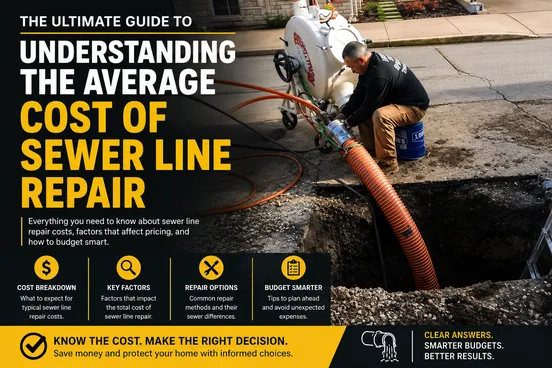
The Ultimate Guide to Understanding the Average Cost of Sewer Line Repair
Introduction
Sewer line problems can transform from minor inconveniences to major disasters faster than most property owners realize. Understanding the average cost of sewer line repair is crucial for homeowners, property managers, and commercial building owners who want to budget effectively for these inevitable maintenance needs. Whether you're dealing with a minor blockage or facing a complete sewer line replacement, having accurate cost expectations helps you make informed decisions about your property's plumbing infrastructure.
Sewer line repair encompasses various services, from simple drain cleaning to complex pipe replacement projects[cite: 2]. The scope of work can range from targeted spot repairs that address localized damage to comprehensive sewer line replacement that involves excavating and installing entirely new piping systems. Emergency plumbing situations often arise when sewer issues are neglected, leading to significantly higher costs than preventative maintenance would have required[cite: 2].
Different types of sewer line repairs serve specific purposes and come with varying price points. Trenchless repairs offer modern solutions that minimize property disruption, while traditional excavation methods remain necessary for certain situations. Understanding these options and their associated costs empowers property owners to choose the most appropriate solution for their specific circumstances, ensuring both immediate problem resolution and long-term system reliability.
Understanding Sewer Line Problems
Sewer line issues manifest in numerous ways, each requiring specific diagnostic approaches and repair strategies. Tree root intrusion represents one of the most common problems, occurring when roots penetrate pipe joints seeking moisture and nutrients. These invasive roots can cause significant blockages and structural damage to pipes, often requiring professional intervention to remove the obstruction and repair damaged sections.
Pipe deterioration affects older properties particularly, as aging materials like clay, cast iron, or Orangeburg pipes break down over time. Corrosion, settling, and normal wear create weak points that eventually lead to cracks, breaks, or complete pipe collapse. Ground shifting and soil conditions contribute to these problems, especially in areas with expansive clay soils or regions prone to freeze-thaw cycles.
Several warning signs indicate potential sewer line repair or blockage problems requiring immediate attention[cite: 2]. Slow-draining fixtures throughout the property suggest main line blockages, while gurgling sounds from drains often indicate air displacement caused by partial obstructions. Sewage backups in basement drains or lowest-level fixtures represent serious problems requiring emergency plumbing response. Unusual odors around the property, particularly near sewer cleanouts or in basement areas, signal potential leaks or ventilation issues.
Additional symptoms include unexplained increases in water bills, which may indicate underground leaks, and soggy or sunken areas in yards that could represent broken sewer lines. Multiple fixture backups occurring simultaneously almost always point to main sewer line problems rather than individual drain issues.
Neglecting sewer line problems creates cascading consequences that dramatically increase repair costs and property damage. Minor blockages can evolve into complete system failures, requiring emergency plumbing services at premium rates. Sewage backups contaminate living spaces, necessitating expensive cleanup and restoration work that insurance may not cover. Structural damage to foundations can occur when leaking sewage undermines soil stability around buildings. Health hazards emerge from exposure to raw sewage, creating liability issues for property managers and landlords.
Factors Affecting the Cost of Sewer Line Repair
The type of repair needed significantly impacts the overall project cost, with spot repairs representing the most economical option for localized damage. Spot repairs typically address specific problem areas without disturbing the entire sewer line, making them ideal for recent breaks or isolated root intrusion issues. These targeted interventions can often utilize trenchless technology, reducing excavation costs and property restoration expenses.
Partial sewer line replacement becomes necessary when damage affects substantial sections but doesn't warrant complete system replacement. This middle-ground approach allows property owners to address problematic areas while preserving functional portions of existing infrastructure. Complete sewer line replacement represents the most expensive option but provides long-term reliability for severely compromised systems.
Repair location dramatically influences project complexity and associated costs. Sewer lines running under driveways, sidewalks, or landscaped areas require additional excavation and restoration work that increases overall expenses. Depth of the sewer line affects excavation difficulty, with deeper lines requiring more extensive digging and safety measures. Lines running under structures or in confined spaces may necessitate specialized equipment and techniques, further increasing costs.
Accessibility plays a crucial role in determining plumbing services costs, as difficult-to-reach areas require more time and specialized equipment[cite: 2]. Urban properties with limited space for equipment access face higher costs than suburban properties with ample working room. Proximity to other utilities requires careful coordination and potentially hand-digging techniques to avoid damage to gas, electric, or water lines.
Material selection affects both immediate costs and long-term performance expectations. PVC pipes offer economical solutions for most residential applications, providing excellent durability at reasonable costs. Cast iron pipes cost more initially but offer superior strength for commercial plumbing applications or areas with heavy traffic loads[cite: 2]. High-density polyethylene (HDPE) pipes provide excellent chemical resistance and flexibility, making them ideal for challenging soil conditions but at premium prices.
Specialized materials like epoxy liners for trenchless repairs command higher material costs but often reduce overall project expenses by eliminating excavation requirements. Clay pipes, while traditional, are rarely used for repairs due to their susceptibility to root intrusion and cracking.
Labor costs vary significantly based on local market conditions, project complexity, and timing requirements. Emergency plumbing cost premiums apply to after-hours, weekend, or holiday service calls, often adding 50-100% to standard rates. Skilled trenchless repair technicians command higher hourly rates than general excavation workers, but their efficiency often reduces total labor hours required.
Local market rates fluctuate based on regional economic conditions, labor availability, and competition among plumbing contractors. Urban areas typically see higher labor costs due to increased living expenses and business overhead, while rural areas may have limited contractor availability that drives up prices.
Average Cost Breakdown
Understanding the average cost of sewer line repair requires examining various repair scenarios and their typical price ranges. Spot repairs for minor issues typically range from $1,500 to $4,000, depending on accessibility and repair method. These repairs address localized problems like small cracks, joint separations, or limited root intrusion without requiring extensive excavation work.
Partial sewer line replacement projects generally cost between $4,000 and $8,000 for residential properties, covering repairs of 20-50 feet of damaged pipe. These projects often combine excavation with trenchless techniques to minimize property disruption while addressing substantial damage areas. Commercial properties may see costs ranging from $6,000 to $15,000 for similar scope work due to larger pipe sizes and more complex installation requirements.
Complete sewer line replacement represents the most significant investment, with residential projects typically ranging from $8,000 to $25,000 depending on property size, line length, and installation complexity. Commercial sewer line replacement costs can exceed $50,000 for large properties with extensive piping systems and specialized requirements.
Labor costs typically represent 60-70% of total project expenses, reflecting the skilled nature of sewer repair work and the time required for proper installation. Material costs account for 20-25% of project totals, varying based on pipe type, fittings, and specialized components required. Equipment rental and permit fees comprise the remaining 10-15% of project costs.
Detailed cost breakdowns reveal specific expense categories that property owners should expect. Excavation work typically costs $75-150 per linear foot, depending on depth and soil conditions. Pipe installation labor ranges from $50-100 per linear foot for standard installations, with specialized trenchless techniques commanding $100-250 per linear foot. Restoration work, including backfill, compaction, and surface repair, adds $25-75 per linear foot to project totals.
Permit fees vary by municipality but typically range from $100-500 for residential projects and $300-1,500 for commercial work. Inspection fees may add another $100-300 to project costs, depending on local requirements and the number of inspections needed throughout the project timeline.
Specific repair scenarios illustrate real-world cost variations that property owners might encounter. A typical residential spot repair addressing root intrusion in a 10-foot section might cost $2,500, including camera inspection, root removal, pipe repair, and restoration. A partial replacement project covering 30 feet of damaged pipe under a driveway could reach $6,500, factoring in excavation complexity and concrete restoration requirements.
How to Choose a Plumbing Service for Sewer Line Repair
Selecting the right plumbing service for sewer line repair requires careful evaluation of credentials, experience, and service capabilities. Licensed plumbers provide essential legal protections and demonstrate professional competency through state-regulated testing and continuing education requirements. Verify licensing status through state regulatory boards and ensure licenses remain current and in good standing.
Insurance coverage protects property owners from liability during repair work and ensures financial protection if accidents or damage occur. Require proof of both general liability insurance and workers' compensation coverage, with minimum coverage amounts appropriate for your property value and project scope. Bonding provides additional financial protection and demonstrates the contractor's financial stability and professional standing.
Experience with sewer line repair specifically matters more than general plumbing experience, as these projects require specialized knowledge and equipment. Ask potential contractors about their sewer repair experience, preferred repair methods, and familiarity with local soil conditions and municipal requirements. Request references from recent sewer repair customers and follow up to verify satisfaction with work quality and professionalism.
Technology capabilities distinguish modern plumbing services from outdated operations that may lack efficient diagnostic and repair tools. Camera inspection equipment allows accurate problem diagnosis without unnecessary excavation, while trenchless repair capabilities can significantly reduce project costs and property disruption. Advanced locating equipment ensures precise excavation and minimizes risks to existing utilities.
Essential questions to ask potential plumbing contractors include their approach to problem diagnosis, repair method recommendations, and warranty coverage on completed work. Inquire about project timeline expectations, potential complications that might affect costs, and their process for handling unexpected discoveries during excavation. Request detailed written estimates that break down labor, materials, and additional costs to enable accurate comparison between contractors.
Ask about emergency plumbing availability and response times, as sewer problems often require urgent attention to prevent property damage and health hazards. Understanding their scheduling flexibility and capacity to handle urgent repairs helps ensure prompt service when needed most.
DIY vs. Hiring a Professional
Limited DIY solutions exist for minor sewer line maintenance tasks that don't require specialized equipment or extensive technical knowledge. Drain cleaning using mechanical snakes or chemical cleaners can address simple blockages in branch lines before they affect main sewer lines. Regular maintenance activities like avoiding inappropriate disposal items and periodic drain cleaning can prevent many sewer line problems from developing.
Root prevention treatments using commercial root killers provide temporary relief for minor root intrusion issues, though these solutions address symptoms rather than underlying problems. Property owners can also maintain proper grading around sewer cleanouts and monitor for early warning signs that indicate developing problems requiring professional intervention.
However, significant risks accompany DIY sewer line repair attempts that can create expensive complications and safety hazards. Improper diagnosis often leads to unnecessary work or failure to address actual problems, resulting in continued issues and additional costs. Excavation work presents serious safety risks from cave-ins, utility strikes, and exposure to hazardous gases that require professional safety protocols and equipment.
Permit requirements typically mandate licensed contractor involvement for sewer line repairs, making DIY work illegal in many jurisdictions. Insurance coverage may be voided if unlicensed work causes property damage or creates liability issues. Improper repairs can cause more extensive damage than original problems, dramatically increasing eventual repair costs when professional intervention becomes necessary.
Professional plumbing services provide numerous advantages that typically justify their costs through superior results and risk mitigation. Accurate problem diagnosis using specialized camera equipment ensures appropriate repair strategies and prevents unnecessary work. Professional-grade equipment and materials offer superior durability and performance compared to consumer-grade alternatives available to DIY enthusiasts.
Warranty coverage on professional work provides long-term protection and demonstrates contractor confidence in their workmanship. Licensed professionals understand local codes and permit requirements, ensuring compliant installations that pass inspections and maintain property values.
Case Studies
A residential property in a mature neighborhood experienced recurring drain backups that initially seemed like simple blockages. The homeowner attempted DIY solutions using chemical drain cleaners and rental snake equipment, spending approximately $300 over six months without resolving the underlying issue. Professional camera inspection revealed extensive tree root intrusion in a 25-foot section of the main sewer line, requiring partial pipe replacement.
The repair project utilized trenchless pipe bursting technology to minimize disruption to established landscaping and a concrete walkway. Total project cost reached $5,800, including inspection, permits, pipe replacement, and restoration work. The homeowner noted that early professional intervention could have prevented root damage progression and potentially reduced costs by $1,500-2,000 through spot repair techniques.
A commercial restaurant faced emergency sewer backup during peak business hours, forcing immediate closure and threatening significant revenue loss. Emergency plumbing response within two hours identified a complete blockage caused by accumulated grease and debris despite regular maintenance protocols. The emergency plumbing cost for after-hours service and immediate clearing reached $1,200, but prevented thousands in lost revenue and potential health department violations.
Follow-up inspection revealed aging cast iron pipes with significant corrosion and multiple weak points likely to fail within two years. The restaurant owner chose proactive replacement during planned renovation periods, coordinating sewer line replacement with other infrastructure upgrades. Total replacement cost of $12,000 was offset by avoiding future emergency situations and business interruptions.
A property management company overseeing multiple residential units experienced simultaneous sewer issues in three buildings within a six-month period. Initial spot repairs averaged $2,200 per building but failed to address systematic problems with aging infrastructure installed during original construction forty years earlier. Comprehensive evaluation revealed that preventative plumbing maintenance programs and systematic replacement scheduling could reduce long-term costs.
The company implemented a five-year infrastructure replacement plan, spreading costs over multiple budget cycles while preventing emergency situations. Negotiated volume pricing with a preferred contractor reduced per-project costs by approximately 15% compared to individual emergency repairs. This strategic approach transformed unpredictable emergency expenses into manageable planned maintenance costs while improving tenant satisfaction through reduced service disruptions.
Cost variations between different scenarios demonstrate the importance of timing and approach in sewer line repair decisions. Emergency repairs consistently cost 40-60% more than planned maintenance, while preventative replacement programs offer the best long-term value despite higher immediate investments.
Conclusion
Understanding the average cost of sewer line repair empowers property owners to make informed decisions about their plumbing infrastructure investments. Cost factors including repair type, location complexity, material selection, and local market conditions create significant variation in project expenses, but typical ranges provide valuable planning guidance for budgeting purposes.
The importance of professional diagnosis and repair cannot be overstated, as proper intervention prevents minor issues from escalating into major emergencies requiring costly solutions. Preventative plumbing maintenance and early problem identification consistently provide better financial outcomes than reactive approaches that wait for complete system failures.
Choosing qualified, licensed professionals ensures proper repair execution, code compliance, and warranty protection that justifies professional service costs through superior long-term results. The investment in quality sewer line repair work pays dividends through reliable system performance, property value preservation, and peace of mind for property owners and managers.
Ready to address your sewer line concerns with professional expertise? Contact TK PLUMBING at (941) 392-3846 for comprehensive sewer line inspection and repair services[cite: 2]. Our licensed professionals provide accurate diagnostics, competitive pricing, and quality workmanship backed by solid warranties. Don't wait for minor issues to become major problems – schedule your consultation today and protect your property investment with reliable plumbing solutions.